Winter with a Tesla Powerwall 3: Analysing a Real January Bill in Bristol
A Bristol home's real January electricity bill with a Tesla Powerwall 3. Import/export data, Octopus Flux earnings, and what winter solar actually delivers.
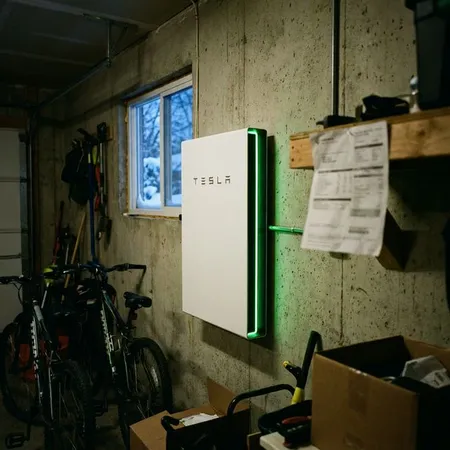
January 2025: What a Bristol 4 kWp System Actually Generated
There is a persistent myth that solar panels are redundant in British winters. There is an equally persistent counter-myth that a home battery completely compensates for the deficit. Neither narrative is precise enough to be useful for the homeowner deciding whether a £7,500–£8,500 Tesla Powerwall 3 investment makes financial sense. What is useful is telemetry data — specifically, verified generation and export logs from a south-facing 4 kWp array in the Bristol region through January 2025.
January is the absolute nadir of the UK solar calendar. The solar zenith angle is depressed, daylight hours are compressed, and algorithmic forecasting tools such as PVGIS estimate approximately 117 kWh of total January generation for a 4 kWp system in the Bristol area. January 2025 proved anomalously productive: prolonged cold, clear high-pressure systems dominated the UK's weather pattern, and crystalline silicon panels — which exhibit a negative temperature coefficient and are actually more electrically efficient on cold, bright days than on hot summer afternoons — delivered exceptional instantaneous output during those compressed daylight windows.
Verified telemetry from a reference installation (a 13.35 kWp DC-coupled array paired with a Tesla Powerwall 3 in the South West), pro-rated to a standard 4 kWp system, recorded the following January 2025 performance:
January 2025 — Verified 4 kWp Performance (Bristol / South West Region)
| Performance Metric | Verified Figure | Notes |
|---|---|---|
| Total monthly generation | 140.07 kWh | 31-day January total, pro-rated from 13.35 kWp reference array |
| Average daily generation | 4.51 kWh/day | Range: near zero (heavy overcast) to 8–12 kWh (clear) |
| Self-consumed on-site | 88.09 kWh (63%) | Captured by household demand and battery storage |
| Exported to grid | 51.98 kWh (37%) | Brief midday surpluses when generation exceeded baseload |
| vs PVGIS January estimate | +23.07 kWh (+20%) | Cold, clear anticyclone drove outperformance |
The 63% self-consumption ratio reflects two converging factors: elevated winter household electrical demand (driven by lighting, heating, and appliances), and the Powerwall 3's overnight charging strategy that minimised battery headroom during midday windows. The 51.98 kWh of export likely occurred as brief, intermittent midday spikes when generation momentarily exceeded the running baseload. Without battery storage, a household achieves a self-consumption ratio of roughly 30–40% in January, exporting far more of the modest daily generation at low flat-rate tariffs.
Tesla Powerwall 3: The UK Specification That Governs the Economics
The financial case for a Powerwall 3 cannot be evaluated without precision on its UK-specific hardware characteristics. Several widely circulated figures — particularly the efficiency rating — are frequently misquoted in ways that overstate projected returns.
- Usable capacity: 13.5 kWh at 100% depth of discharge — Tesla's BMS permits full utilisation of the stated capacity.
- Solar-to-home efficiency: 97.5% — the conversion loss when DC solar power flows through the integrated inverter directly to on-site appliances, bypassing battery storage.
- Round-trip battery efficiency: 89% — the true efficiency of the charge-discharge cycle. To store 13.5 kWh usably, the system must import 15.17 kWh (13.5 ÷ 0.89). This is the figure governing arbitrage economics, not the 97.5% figure that applies only to direct solar-to-home flow.
- Maximum continuous AC output: 11.04 kW (48A × 230V UK nominal voltage), subject to G99 DNO approval. Without G99, a G98-notified installation is software-limited to 3.68 kW — roughly one-third of full capability. G99 approval typically takes 1–3 months and is essential for full arbitrage and whole-home backup potential.
- Maximum grid charge rate: 5 kW. During the 3-hour off-peak window, the unit can draw a maximum of 15 kWh from the grid — sufficient to charge from near-empty to full in a single overnight session.
- Installed cost (UK, 2026): £7,500–£8,500 fully commissioned (Backup Gateway 2, G99 DNO application, wiring, MCS-certified labour). 0% VAT applies.
- Warranty: 10 years, guaranteed minimum 80% capacity retention (≥10.8 kWh usable at Year 10).
- Scalability: Up to three DC expansion packs (no additional inverter required) extend total capacity to 54 kWh on a single Leader unit.
Octopus Flux — Exact Q1 2026 South West England Rates
Octopus Flux is a time-of-use tariff designed exclusively for homes with solar and battery storage. Unlike flat Smart Export Guarantee rates (typically 4–15p/kWh), Flux provides differentiated import and export pricing across three daily time bands aligned with the national grid's Duck Curve — the structural mismatch between midday solar surplus and early-evening peak demand. The following rates are verified for South West England as of February 2026:
Octopus Flux — South West England, Q1 2026 (Verified Rates)
| Period | Hours | Import Rate | Export Rate |
|---|---|---|---|
| Super Cheap (off-peak) | 02:00–05:00 | 17.33p/kWh | 4.55p/kWh |
| Standard | 05:00–16:00 & 19:00–02:00 | 28.88p/kWh | 10.20p/kWh |
| Peak | 16:00–19:00 | 40.43p/kWh | 29.22p/kWh |
| Daily standing charge | All day | 54.39p/day (inc. VAT) | |
The gross spread between the off-peak import rate (17.33p) and the peak export rate (29.22p) is 11.89p/kWh. After the 89% round-trip efficiency, the effective cost per kWh stored is 17.33p ÷ 0.89 = 19.47p/kWh. The net arbitrage margin per kWh cycled through the battery and exported at peak is therefore 29.22p − 19.47p = 9.75p/kWh. For the full 13.5 kWh usable capacity cycled once daily, that is £1.32 net daily profit from grid arbitrage alone — before any solar contribution.
The margin widens when peak battery discharge displaces household consumption rather than exporting. A unit avoiding a 40.43p peak import at an effective stored cost of 19.47p delivers a net benefit of 20.96p/kWh — more than double the export margin.
The January Daily Arbitrage Cycle — Step by Step
The Powerwall 3 executes the following automated cycle during a January winter day on Octopus Flux. The Tesla app's Time-Based Control algorithm handles this without manual intervention:
- 02:00–05:00 (Super Cheap window): The system forces a full grid charge at 5 kW maximum. Over 3 hours, it pulls 15 kWh from the grid at 17.33p/kWh — total cost: £2.60. At 89% round-trip efficiency, this yields 13.35 kWh of usable stored energy, effectively filling the 13.5 kWh battery to capacity.
- 05:00–16:00 (Standard rate, daylight hours): The solar array generates an average of 4.51 kWh, absorbed immediately by household baseload. The battery holds its charge, preventing any standard-rate imports at 28.88p/kWh. Brief midday surpluses — the source of those 51.98 kWh of monthly exports — occur when generation spikes above instantaneous demand.
- 16:00–19:00 (Peak window): Grid electricity surges to 40.43p/kWh import, 29.22p/kWh export. The Powerwall takes over the entire home load. A typical 3 kWh of in-home consumption is covered, avoiding £1.21 of peak-rate imports. The remaining approximately 8 kWh is exported to grid, generating £2.34 of export revenue. Combined peak-window value: £3.55.
- 19:00–02:00 (Standard rate, evening): Residual battery capacity covers evening household demand before the next overnight charge cycle begins.
Net daily financial outcome of one full cycle: peak and evening value generated ≈ £3.55; charge cost £2.60; net daily margin ≈ £0.95. Over 31 January days: approximately £29 in grid arbitrage benefit, entirely weather-independent.
The Full January Financial Model
Combining the verified January 2025 generation data with the arbitrage model and exact Flux rates produces the following complete January picture for the Bristol household:
January 2025 Financial Model — 4 kWp + Powerwall 3 + Octopus Flux (Bristol)
| Income / Saving Component | Volume | Rate | January Value |
|---|---|---|---|
| Solar self-consumption (avoided import) | 88.09 kWh | 28.88p standard | £25.44 |
| Solar export earnings | 51.98 kWh | 10.20p standard | £5.30 |
| Peak export (8 kWh/day × 31 days) | 248 kWh | 9.75p net/kWh (29.22p export − 19.47p cost) | £24.18 |
| Peak demand displacement (3 kWh/day × 31 days) | 93 kWh | 20.96p net/kWh (40.43p avoided − 19.47p cost) | £19.49 |
| Estimated total January benefit | ~£74 | ||
Arbitrage modelled on verified Powerwall 3 specs: 5 kW grid charge rate, 89% RTE, 13.5 kWh usable. Exact Octopus Flux South West Q1 2026 rates applied. Standing charge (54.39p/day × 31 = £16.86) is a fixed cost paid regardless of system configuration and is excluded. Actual figures depend on household profile and day-to-day dispatch conditions.
Without the Battery: The Counterfactual
Without the Powerwall 3, the same 4 kWp array achieves a self-consumption ratio of approximately 30–35% in January. On 140.07 kWh total generation:
- Self-consumed (35%): 49 kWh × 28.88p = £14.15 saved
- Exported (65%): 91 kWh × 10.20p = £9.28 earned
- Grid arbitrage: £0 (no battery to cycle)
- January total without battery: ~£23
The Powerwall 3 adds approximately £51 of incremental January value over solar alone — primarily through grid arbitrage, not through dramatically improved solar self-consumption, though the battery does lift self-consumption from ~35% to 63%, capturing an additional 39 kWh that would otherwise be exported at 10.20p instead of saved at 28.88p. The net value of that self-consumption improvement alone is (28.88p − 10.20p) × 39 kWh = £7.28 per January month.
Payback, Degradation, and Long-Term Perspective
A £7,500–£8,500 system generating ~£74 of January benefit — and considerably more during spring and summer months when daily solar generation saturates the 13.5 kWh battery and self-consumption ratios exceed 85% — sits within a realistic payback window. The full-year incremental value of the Powerwall 3 over a solar-only system, across the three benefit streams, is conservatively estimated at £600–£900 per year for a South West home on Octopus Flux. At a mid-point of £750/year on a £8,000 investment, the battery payback is approximately 10–11 years.
Both components degrade over time. Modern monocrystalline panels lose 1–3% in Year 1 (Light-Induced Degradation) then 0.3–0.5% linearly per year thereafter. Tesla's 10-year warranty guarantees the Powerwall 3 retains at least 80% capacity (≥10.8 kWh) at Year 10, implying roughly 2% annual degradation. January generation at Year 10 drops to approximately 113–120 kWh; the battery's usable capacity shrinks to around 10.8–11.5 kWh. Arbitrage margins compress proportionally, but the system remains financially active well beyond the warranty period.
The key long-term variable is not hardware degradation but tariff evolution. The 9.75p/kWh net arbitrage margin exists because the UK grid currently needs distributed batteries to stabilise the Duck Curve. As battery saturation grows across the South West, the peak/off-peak spread will likely narrow. The Q1 2026 Octopus Flux rates represent a particularly lucrative window for early adopters — the 23.1p/kWh spread between the 17.33p overnight rate and the 40.43p peak import rate reflects current grid instability, not a permanent structural condition.
What January Confirms
January 2025 in Bristol was an anomalously productive month — the anticyclonic conditions that pushed generation 20% above PVGIS estimates will not repeat every year. A more typical January produces 110–120 kWh total, reducing solar self-consumption value proportionally. The grid arbitrage margin, however, is weather-independent: it derives from electricity prices and battery capacity, not from sunshine hours.
In January, a Powerwall 3 on Octopus Flux earns its return primarily from grid price management, not from solar storage. The transformative solar economics — battery charges entirely from solar, self-consumption above 85%, monthly savings of £100–£150 — are exclusively a spring and summer phenomenon. January is the rigorous baseline from which to evaluate the investment case, and at Q1 2026 South West Flux rates, the Powerwall 3 passes that test: delivering approximately £74 of monthly benefit from a combination of 140 kWh of real solar generation and automated price-spread arbitrage operating every night, sun or no sun.
Ready to Take Action?
Get free quotes from local MCS-certified installers
Takes under 4 minutes. No cold calls. No obligation.
Get My Free Quotes →Get Your Free Quotes
Takes under 4 minutes · No obligation

Written by
Mark Anthony Haines
Mark has over a decade of experience in the UK renewable energy sector, specialising in solar PV, heat pump systems, and home battery storage. He founded HeatPumpsAndSolar.co.uk to help UK homeowners cut through the noise around green energy installations, government grant schemes, and smart tariffs.
View LinkedIn ProfileMore from Our Insights
Tools & Services Related to This Article
Take the next step with a free calculator or a local installer quote.