How to Claim Up to £30,000 from the Warm Homes Local Grant
The Warm Homes Local Grant offers up to £30,000 per household for solar panels, heat pumps, insulation, and battery storage — fully funded, no repayment required. This guide breaks down the three eligibility pathways, the income thresholds, what the grant actually covers, and exactly how to apply before your council funding runs out.
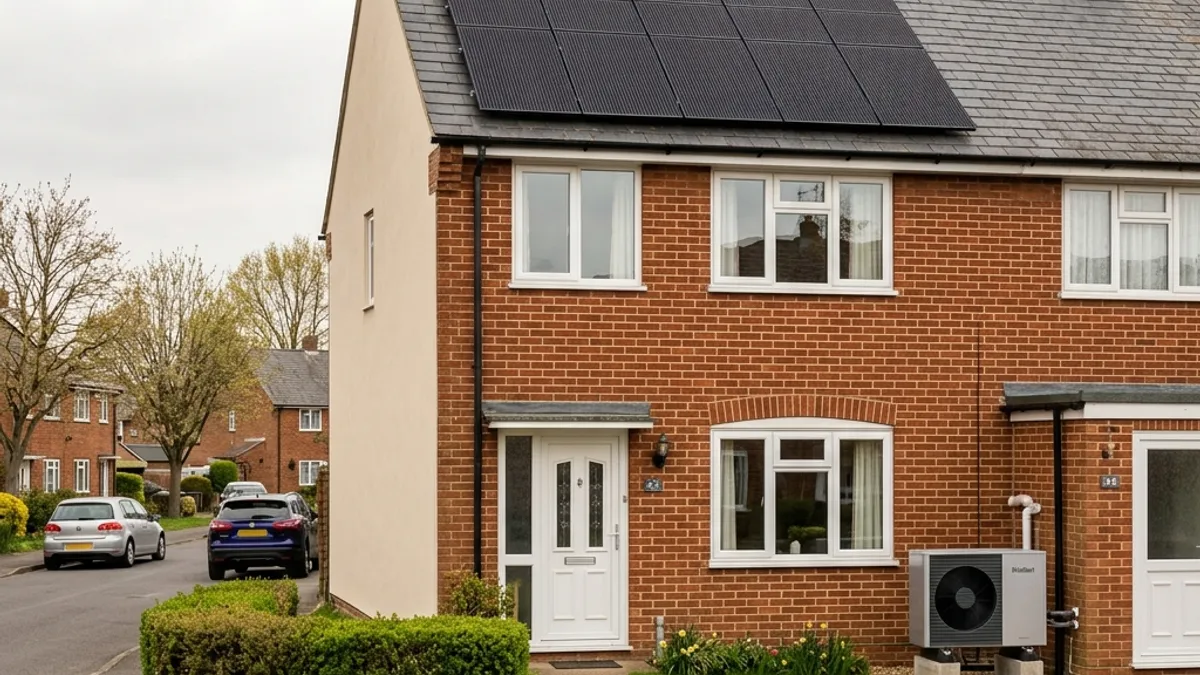
AT A GLANCE
- Up to £30,000 — the maximum per-household funding available under the Warm Homes Local Grant, split across two separate pots: £15,000 for energy performance measures and £15,000 for low carbon heat technologies
- £36,000 — the gross annual household income ceiling for the primary income-based eligibility pathway, before deductions, encompassing all adults in the property
- EPC D–G — the mandatory Energy Performance Certificate band range for eligible properties; homes already rated A, B, or C are explicitly excluded from the scheme
The Warm Homes Local Grant is currently the largest, most comprehensively funded domestic retrofit scheme the UK government has ever deployed directly through local authorities to private homeowners. Backed by an initial allocation of £500 million for the 2025 to 2028 delivery window — and embedded within the overarching £15 billion Warm Homes Plan — the scheme provides eligible households with a complete package of energy efficiency and low carbon heat upgrades, at zero cost to the occupant. There is no loan, no repayment schedule, and no clawback mechanism. The funding is a direct capital grant administered locally.
Despite its scale and financial significance, the scheme remains poorly understood at consumer level. Official communication has been routed primarily through local councils and their procured delivery partners rather than a unified national consumer campaign. The result is widespread confusion about whether a household qualifies, which technology the money can fund, and crucially, how to begin an application before a council's allocation runs out. Several councils, including those in London, Sefton, and East Devon, have already confirmed their programmes are heavily oversubscribed and are processing applications strictly on a first-come, first-served basis.
This guide strips out the bureaucratic language from the official Department for Energy Security and Net Zero (DESNZ) policy guidance and translates it into a precise, actionable eligibility and application framework. Every data point below is sourced directly from official DESNZ documentation, Ofgem guidance, or the House of Commons Public Accounts Committee.
What Is the Warm Homes Local Grant — and Where Did It Come From?
Understanding what the Warm Homes Local Grant actually is — and what it is not — matters enormously, because the market is littered with conflations between several entirely distinct government programmes that have existed concurrently or in sequence over the last decade.
The WH:LG is a taxpayer-funded capital grant scheme, funded directly from the Treasury Exchequer and disbursed to local authorities in England through a competitive application process administered by DESNZ. Its direct architectural predecessors are the Local Authority Delivery (LAD) scheme and the Home Upgrade Grant (HUG), both of which deployed similar models of council-led private-property retrofit funding. The WH:LG is emphatically not a continuation of the Energy Company Obligation (ECO4) or the Great British Insulation Scheme (GBIS). Those were entirely different animals — supplier obligation schemes funded through levies applied directly to consumer energy bills, and administered by the energy companies themselves rather than elected councils. That distinction matters, as it goes to the heart of why the WH:LG was designed with significantly more rigorous quality assurance protocols.
In early 2026, the government formally announced the conclusion of both ECO4 and GBIS as active delivery programmes. GBIS closed entirely on 31 March 2026. ECO4 received a strict, terminal extension to 31 December 2026, but exclusively to force obligated energy suppliers to execute a mandatory remediation programme for defective legacy installations — no new delivery targets were issued. The levied model, which effectively taxed every household's energy bill to fund installations on a small subset of qualifying homes, has been formally discontinued.
Filling that void — and operating on a substantially different funding and governance model — is the Warm Homes Plan. The Plan commits £15 billion across the remainder of the decade, targeting the eradication of fuel poverty by 2030 and contributing meaningfully to the statutory Net Zero 2050 target. Of the £1.8 billion immediately allocated to tackle statutory fuel poverty obligations, £500 million has been ringfenced for the Warm Homes Local Grant's first three-year phase.
Why this scheme is different from ECO4
ECO4 was administered by energy suppliers with financial incentives to maximise installation volume. The WH:LG is administered by elected local authorities, with mandatory PAS 2030/2035 compliance, independent Retrofit Coordinators, and TrustMark registration for every property treated. The fundamental regulatory architecture is entirely different, and it was designed explicitly to prevent the systemic failures that plagued the supplier obligation model.
How Much Can You Receive — Understanding the £30,000 Cap
The headline figure of £30,000 per household is accurate but requires careful unpacking, because the money is not structured as a single lump sum. The scheme operates through two entirely separate, non-interchangeable funding pots, each subject to its own maximum cap. Understanding which pot funds which technology is essential before you begin the application process.
The first pot — the Energy Performance pot — carries a maximum cap of £15,000. This covers what policy documents term "fabric-first" measures: the physical improvements to a building's shell that reduce the rate of heat loss. These include cavity wall insulation, solid wall insulation (both internal and external), loft insulation, floor insulation, draught-proofing, and the replacement of single-glazed windows with double or triple glazing. Critically, the Energy Performance pot also covers smart energy technologies, including solar photovoltaic (PV) arrays and home battery storage systems. An eligible household could use this entire £15,000 allocation toward a combined solar and battery storage installation, with no personal contribution required.
The second pot — the Low Carbon Heat pot — carries an identical £15,000 cap. This funding is exclusively reserved for technologies that replace fossil fuel or direct electric heating with a verified low-carbon heat source. Air source heat pumps are the primary technology funded under this classification, alongside high-retention storage heaters for properties where a wet heating system is not practical.
One critical regulatory nuance that official documentation makes absolutely clear: these £15,000 caps are not hard limits applied rigidly to every individual property. They operate as average cost caps that must be met across the local authority's entire project portfolio by the time the project reaches closure. This averaging mechanism gives councils the operational flexibility to treat properties requiring genuinely complex or expensive interventions — such as solid wall insulation on a hard-to-treat Victorian terrace — while remaining compliant with the overall scheme economics. In practice, it means that some individual properties within a batch may receive more than £15,000 per pot, provided the batch average remains within the permitted ceiling.
| Funding Pot | Average Cap Per Property | Technologies Covered |
|---|---|---|
| Energy Performance | £15,000 | Cavity wall insulation, solid wall insulation, loft insulation, floor insulation, double/triple glazing, solar PV, battery storage |
| Low Carbon Heat | £15,000 | Air source heat pumps, high-retention storage heaters |
| Combined Maximum | £30,000 | Full deep retrofit — fabric, solar, and heat pump in a single coordinated project |
It is also worth noting what the scheme explicitly does not fund. DESNZ has implemented specific "Measure Price Limits" (MPLs) for certain high-cost interventions — particularly external wall insulation — to prevent supply chain price inflation. However, the exact figures attached to these MPLs are classified. DESNZ mandates that participating local authorities sign Non-Disclosure Agreements before accessing the MPL matrix, specifically to prevent contractors from artificially inflating quotes to the maximum permitted government subsidy. Any source that publishes granular per-measure caps for individual technologies is publishing unverified market estimates, not statutory scheme limits.
The Three Eligibility Pathways — Which One Applies to You?
This is the section of the scheme that generates the most confusion, because eligibility does not rely on a single, simple financial test. The WH:LG operates through three entirely distinct qualifying pathways, and a household needs to satisfy only one of them to proceed to a technical assessment. These pathways are deliberately structured to capture different categories of vulnerable or low-income households without forcing every applicant through an identical bureaucratic process.
A property must also hold a valid EPC rating between Band D and Band G to qualify under any pathway. Homes already rated A, B, or C are explicitly and unconditionally excluded from the scheme. If your property has no valid EPC — or has one that is expired or historically inaccurate — the local authority is mandated to commission a pre-installation Retrofit Assessment to generate a baseline EPC, the cost of which is absorbed by the grant itself.
Pathway 1 — Geographic Eligibility (IMD Deciles 1 and 2)
The most frictionless route to eligibility is geographic. The scheme automatically qualifies all households residing in Lower Layer Super Output Areas (LSOAs) that fall within Income Deciles 1 and 2 of the Indices of Multiple Deprivation (IMD). In plain terms, this means the bottom 20% of all census geographies in England, ranked by a composite weighting of income deprivation, employment deprivation, health outcomes, crime levels, and barriers to housing services.
If your postcode falls within one of these automatically eligible areas, there is no requirement to disclose your personal income, demonstrate benefit receipt, or provide financial documentation of any kind. The area-based approach allows local delivery partners to execute concentrated, street-level retrofit rollouts without subjecting heavily deprived neighbourhoods to invasive, individualised means-testing. In practice, eligible postcodes tend to be concentrated in northern English cities, coastal towns with high unemployment, and specific estates within major urban centres. The government's official eligibility checker at GOV.UK allows you to enter your postcode to confirm IMD status within seconds.
Pathway 2 — Means-Tested Benefits
The second pathway qualifies households based on the receipt of specific, DESNZ-authorised means-tested benefits. This route is explicitly designed for working-age households and pensioners whose financial vulnerability is formally recognised by the benefits system but who may not reside in a Pathway 1 postcode, or whose total gross income exceeds the Pathway 3 threshold.
The official list of qualifying benefits is strictly defined in DESNZ guidance and covers six specific payments:
- Housing Benefit
- Income-based Jobseeker's Allowance (JSA)
- Income-related Employment and Support Allowance (ESA)
- Income Support
- Pension Credit (Guarantee Credit or Savings Credit)
- Universal Credit
A significant operational discrepancy exists here that applicants must understand. Several local authorities and their delivery partners — including those in the Liverpool City Region — actively advertise Child Tax Credit and Working Tax Credit as qualifying benefits on their local landing pages. This appears to reflect discretionary leniency applied during the managed transition toward Universal Credit rather than the official central government position. The most recent and authoritative DESNZ Policy Guidance explicitly omits both Tax Credits from the sanctioned benefit list. To ensure national accuracy, the six benefits above are the definitively verified qualifying payments. Individual councils may exercise discretion; it is worth asking your specific local authority directly if you are receiving legacy Tax Credits.
Pathway 3 — Income Threshold
The third and broadest pathway qualifies households based on a gross annual income ceiling of £36,000 or less. This figure represents the combined gross income of every adult residing in the property before any tax deductions, and must include all income streams: employment earnings, self-employment income, pension income, and any investment income exceeding the savings allowance.
However, the policy contains a critically important equivalisation mechanism specifically designed to prevent the penalisation of larger families with higher headline incomes but proportionally lower residual spending power. Households whose combined gross income exceeds £36,000 may still qualify if their residual income falls below an adjusted After Housing Costs (AHC) threshold. This secondary calculation deducts mortgage or rent payments from gross income and then applies a scaled maximum based on household composition.
| Household Composition | No Dependents | 1 Dependent | 2 Dependents | 3 Dependents | 4 Dependents | 5 Dependents |
|---|---|---|---|---|---|---|
| 1 Adult | £20,000 | £20,000 | £20,000 | £23,600 | £27,600 | £31,600 |
| 2+ Adults | £20,000 | £24,000 | £28,000 | £32,000 | £36,000 | £40,000 |
The AHC mechanism means that a two-adult household with three dependent children earning a combined £40,000 gross — comfortably above the headline threshold — may still qualify if their residual income after housing costs falls below £32,000. For families with high rent or mortgage burdens in expensive regions, this second-tier calculation can determine eligibility in scenarios where the primary threshold appears to close the door.
Key insight — you only need to qualify under one pathway
A household residing in a Pathway 1 IMD Decile 1-2 postcode qualifies unconditionally, regardless of income. A household earning £50,000 gross but receiving Universal Credit qualifies via Pathway 2. A two-adult household with four dependents earning £35,000 qualifies via Pathway 3's primary threshold. These routes are mutually exclusive but collectively exhaustive — check all three before concluding you are ineligible.
Check Your Eligibility Now
Our eligibility checker maps your postcode, benefit status, and income against all three WH:LG pathways and routes qualifying applications directly to your local council.
Check Grant EligibilityWhat the Grant Covers — A Whole-House Retrofit Approach
The most financially powerful outcome available under the WH:LG is a coordinated, whole-house deep retrofit that simultaneously maximises the insulation of the building envelope and installs a low-carbon heating and generation system. This is precisely the outcome the scheme is designed to incentivise, and an eligible household could theoretically access both the full £15,000 Energy Performance pot and the full £15,000 Low Carbon Heat pot — receiving up to £30,000 in upgrades within a single project delivery cycle.
A typical deep retrofit package for a three-bedroom semi-detached property with an EPC D rating might combine cavity wall insulation, loft insulation top-up, and a 3.5kW solar PV array under the Energy Performance pot, then fund an air source heat pump installation under the Low Carbon Heat pot. Executed correctly under PAS 2030/2035 standards by a TrustMark-accredited retrofit coordinator, this combination moves the property from EPC D to B in a single intervention, dramatically reducing both heating bills and the household carbon footprint. For a detailed breakdown of what a combined solar and heat pump installation looks like in practice — including running costs and the interaction between solar generation and heat pump electricity demand — see our combined solar and heat pumps guide.
Private renters should be aware that the scheme is open to them as well as owner-occupiers, but with one important constraint specific to the rental sector. Privately rented properties currently rated F or G by EPC are only eligible for WH:LG funding if the landlord has formally registered a valid exemption under the Energy Efficiency (Private Rented Property) (England and Wales) Regulations 2015. This rule prevents taxpayer funds from being used to subsidise a landlord's basic legal compliance obligation — if a landlord is simply failing to meet their legal requirement and claiming they cannot afford it, the WH:LG is not designed to absorb that cost without an exemption being in place first.
Social housing is explicitly excluded from the WH:LG with a narrow, strictly regulated exception. Social housing may be included within a project batch purely for in-fill purposes — for example, where a social property sits within a larger block undergoing external wall insulation alongside privately owned flats. This in-fill component is capped at 10% of the total homes in a batch, and social housing landlords utilising it must contribute a minimum 50% of the total upgrade cost. Tenants of social housing seeking comparable retrofit support should engage with their landlord regarding the separate Warm Homes: Social Housing Fund (WH:SHF).
Stacking the Warm Homes Local Grant with the Boiler Upgrade Scheme
One of the most financially compelling — and underutilised — strategies available to eligible households is the concurrent use of both the Warm Homes Local Grant and the Boiler Upgrade Scheme (BUS). Official DESNZ and Ofgem guidance confirms that these two schemes can be stacked on the same property, provided a single, strict anti-fraud rule is observed: public funding cannot be used simultaneously to finance the exact same individual measure. A grant cannot pay for a heat pump twice; but two separate grants absolutely can fund two separate elements of a retrofit on the same property.
In practice, the optimal strategy works as follows. An eligible household applies to Ofgem via their MCS-certified installer to claim the £9,000 BUS voucher toward an air source heat pump installation. Concurrently, they engage their local council under the WH:LG to access the £15,000 Energy Performance pot for prerequisite fabric measures — cavity wall insulation, loft insulation, and a solar PV array. The BUS funds the heat pump from the Low Carbon Heat allocation; the WH:LG Energy Performance pot funds the solar and insulation. No individual measure is double-funded. The household receives a comprehensive, whole-house deep retrofit with total public subsidy of up to £24,000, covering what would otherwise represent a capital outlay of £25,000 to £35,000 for a professional-grade, fully commissioned system.
| Funding Source | Technology Funded | Maximum Grant Value |
|---|---|---|
| WH:LG — Energy Performance Pot | Solar PV, battery storage, insulation, glazing | £15,000 |
| WH:LG — Low Carbon Heat Pot | Air source heat pump | £15,000 |
| Boiler Upgrade Scheme (BUS) | Air source heat pump (in lieu of WH:LG Low Carbon Heat pot) | £9,000 |
The stacking scenario makes most strategic sense for households who qualify for the WH:LG but whose local authority has already exhausted its Low Carbon Heat pot allocation — a scenario that is increasingly common given the pace of oversubscription in 2026. In that situation, using the BUS via Ofgem to fund the heat pump, while the local authority funds fabric and solar measures from the remaining Energy Performance allocation, achieves near-equivalent outcomes. For a full breakdown of the Boiler Upgrade Scheme's eligibility rules and application process, see our dedicated Boiler Upgrade Scheme guide.
The ECO4 Scandal — Why Quality Assurance Matters This Time
Any article about large-scale government home retrofit funding in 2026 must directly address the question that is foremost in many homeowners' minds: given what happened with ECO4, is another government scheme worth trusting? The answer, based on the regulatory architecture of the WH:LG, is unambiguously yes — but understanding exactly why the new scheme is structurally different is essential context.
On 23 January 2026, the House of Commons Public Accounts Committee published its Sixty-Second Report of Session 2024–26, titled "Faulty energy efficiency installations." The report, which drew heavily on primary data gathered by the National Audit Office, reached conclusions of extraordinary severity. Official audits concluded that 98% of external wall insulation and 29% of internal wall insulation installed under ECO4 up to mid-January 2025 were fundamentally defective. More than 30,000 households were left exposed to severe damp, aggressive mould growth, and critical structural risks. Approximately 3,000 of those properties presented immediate health and safety hazards to occupants. Standard £20,000 insurance-backed guarantees were failing to cover the extensive property damage, leaving the most vulnerable households financially exposed. The PAC formally recommended that the government refer the entire scheme to the Serious Fraud Office to investigate evidence of widespread falsification of installation records.
This was not a minor implementation failure. It was, in the words of the PAC report itself, a "clear and catastrophic failure" of a government-funded programme. The WH:LG was designed in the aftermath of this crisis, and its regulatory architecture reflects that origin. Every delivery partner, managing agent, and physical installer operating under the WH:LG must hold TrustMark accreditation — the government-endorsed quality assurance framework for the retrofit sector. Every installation must comply with PAS 2030/2035, the British Standard for domestic retrofitting, which mandates the mandatory involvement of an independent Retrofit Coordinator to oversee project design and ensure that insulation measures are always paired with necessary ventilation upgrades — a critical failure point in previous schemes. Every property treated must be registered as a TrustMark PAS 2035 Project in the TrustMark Data Warehouse before work begins, with final lodgements completed within four weeks of batch approval, creating a continuous, auditable trail of every taxpayer pound spent.
What to verify before any installer visits your property
- Confirm the installer holds TrustMark accreditation — verifiable on the TrustMark website using their registration number
- Confirm the project will be overseen by a PAS 2035-qualified Retrofit Coordinator, independent from the installation company
- Confirm a Retrofit Assessment will be completed before any work is specified — not after
- Confirm the project will be registered in the TrustMark Data Warehouse prior to installation commencing
Funding Allocation Status — Act Quickly
The WH:LG was allocated to 74 projects involving 271 local authorities — representing over 97% of eligible councils in England. However, the initial £500 million allocation has proven dramatically insufficient to meet ground-level demand, and by Q1 2026 the scheme was operating in a state of acute oversubscription.
The Greater London Authority secured the largest single allocation in the country at £53.4 million, distributed across 31 London boroughs. Despite this substantial funding, the GLA was forced to temporarily pause new applications entirely in early 2026 to process a backlog of existing expressions of interest. Sefton Council, East Devon District Council, and Bolsover Council have all issued formal public warnings that meeting the eligibility criteria does not guarantee funding, and that qualifying applications are being added to indefinite waiting lists. The available evidence strongly indicates that the rate of eligible applications is substantially outpacing the rate of funded installations nationally.
This oversubscription creates an immediate imperative for eligible households. Every week of delay reduces the statistical probability of accessing funding within the current 2025–2028 delivery window. The government has indicated that the broader Warm Homes Plan intends to evolve its financial instruments over time — including the introduction of government-backed, low-interest green loans for households above the income thresholds — but these mechanisms are not yet fully operational. For households that qualify under one of the three eligibility pathways today, the WH:LG grant represents the most financially generous route available, and waiting carries real cost.
How to Apply — The Central GOV.UK Eligibility Checker
The application architecture for the WH:LG was historically fragmented. In its earliest operational phase, consumers were required to independently identify their specific local authority's delivery partner — often an outsourced commercial contractor such as Sureserve — and navigate that organisation's own intake process. This created significant friction, particularly for digitally excluded or elderly households.
That architecture has been substantially overhauled. There is now a fully operational, unified central government portal at gov.uk/apply-warm-homes-local-grant, officially titled the "Warm Homes: Local Grant Eligibility Checker." Developed in collaboration with the Government Digital Service, the tool allows a household to input their postcode, declare their benefit receipt or household income, and automatically interface with the national EPC database. If the algorithmic logic determines the household is eligible based on those inputs, the application is securely routed to the correct local authority or their procured delivery partner for immediate processing. An assisted digital telephone helpline is maintained in parallel for residents who are unable to complete the online process independently.
The official process runs as follows:
- Confirm your property holds a valid EPC rating between Band D and Band G (or lacks an EPC entirely, in which case the Retrofit Assessment will establish a baseline)
- Identify which of the three eligibility pathways applies to your household — geographic, benefit-based, or income threshold
- Complete the central GOV.UK eligibility checker with your postcode and relevant financial or benefit information
- If confirmed eligible, your application is automatically routed to your local authority or delivery partner
- A TrustMark-accredited Retrofit Coordinator will conduct a whole-house Retrofit Assessment to specify the appropriate measures
- Upon local authority approval, a TrustMark PAS 2035 Project is registered and installation proceeds at zero cost to the household
Check Eligibility and Start Your Application
Our eligibility checker cross-references your postcode, income, and benefit status against all three WH:LG pathways, then connects qualifying households directly to their local delivery partner.
Check Grant EligibilityWhat If You Don't Qualify — The Alternatives
Households that fall outside all three eligibility pathways — typically those earning above £36,000 with no qualifying benefit receipt, or those already holding an EPC C or above — are not without options. The landscape of available financial instruments is evolving rapidly in response to the recognition that the grant alone cannot fund the government's target of upgrading five million homes by 2030.
The Boiler Upgrade Scheme remains available to owner-occupiers replacing a gas boiler, oil boiler, or direct electric heating system with a heat pump. This is an income-agnostic grant — there is no household income limit — and delivers £9,000 toward an air source heat pump or ground source heat pump, or £2,500 for an air-to-air system replacing direct electric heating. There are no means-testing requirements, no EPC minimum band (an EPC is required, but there is no band floor), and the process is managed entirely by your MCS-certified installer.
For households seeking solar panel installation outside the grant framework, the government is actively developing a programme of zero-interest and low-interest green consumer loans. Designed specifically for the "squeezed middle" — households earning above the £36,000 WH:LG threshold but lacking the upfront capital for a full solar and heat pump package — these loan instruments are intended to transform what is currently a capital expenditure decision into a monthly payment that can be offset directly against the energy bill savings generated by the installation. For a full financial model of solar installation economics at current energy prices, see our solar payback calculator.
Scotland, Wales, and Northern Ireland — The Devolved Equivalents
The Warm Homes Local Grant is a specifically English policy mechanism. Homeowners in the devolved nations are not eligible for the WH:LG, but proportional Barnett formula funding of £1.5 billion has been transferred to the devolved administrations to support locally tailored equivalents.
In Scotland, capital is deployed primarily through the Home Energy Scotland Grant and Loan scheme, which blends direct grants with zero-interest financing, alongside the Warmer Homes Scotland programme for fuel-poor households. In Wales, following the closure of the Warm Homes Nest scheme in 2024, delivery has transitioned toward the Optimised Retrofit Programme, alongside strict new regulations mandating EPC C ratings for all privately rented properties by 2030. In Northern Ireland, funding flows through the Affordable Warmth Scheme and the Sustainable Energy Programme, supplemented by a new tranche of low-interest loans for homeowners who do not meet low-income thresholds.
The eligibility criteria, application processes, and technology coverage of each devolved scheme differ substantially from the English WH:LG framework. Homeowners in Scotland, Wales, and Northern Ireland should contact their relevant national energy agency directly for up-to-date scheme guidance appropriate to their jurisdiction.
Explore All Available UK Grants
A full overview of the Boiler Upgrade Scheme, Warm Homes Local Grant, and forthcoming green loan products in one place.
View All UK GrantsReady to Take Action?
Does your home qualify for the BUS grant?
Check eligibility and compare quotes from local MCS-certified installers — free, no obligation.
Check My Eligibility →Get Your Free Quotes
Takes under 4 minutes · No obligation

Written by
Mark Anthony Haines
Mark has over a decade of experience in the UK renewable energy sector, specialising in solar PV, heat pump systems, and home battery storage. He founded HeatPumpsAndSolar.co.uk to help UK homeowners cut through the noise around green energy installations, government grant schemes, and smart tariffs.
View LinkedIn ProfileMore from Our Insights
Homeowner questions on this topic
Compare the guide with common questions and experiences from UK homeowners.
Tools & Services Related to This Article
Take the next step with a free calculator or a local installer quote.