Solar Soft Cost Regional Comparator
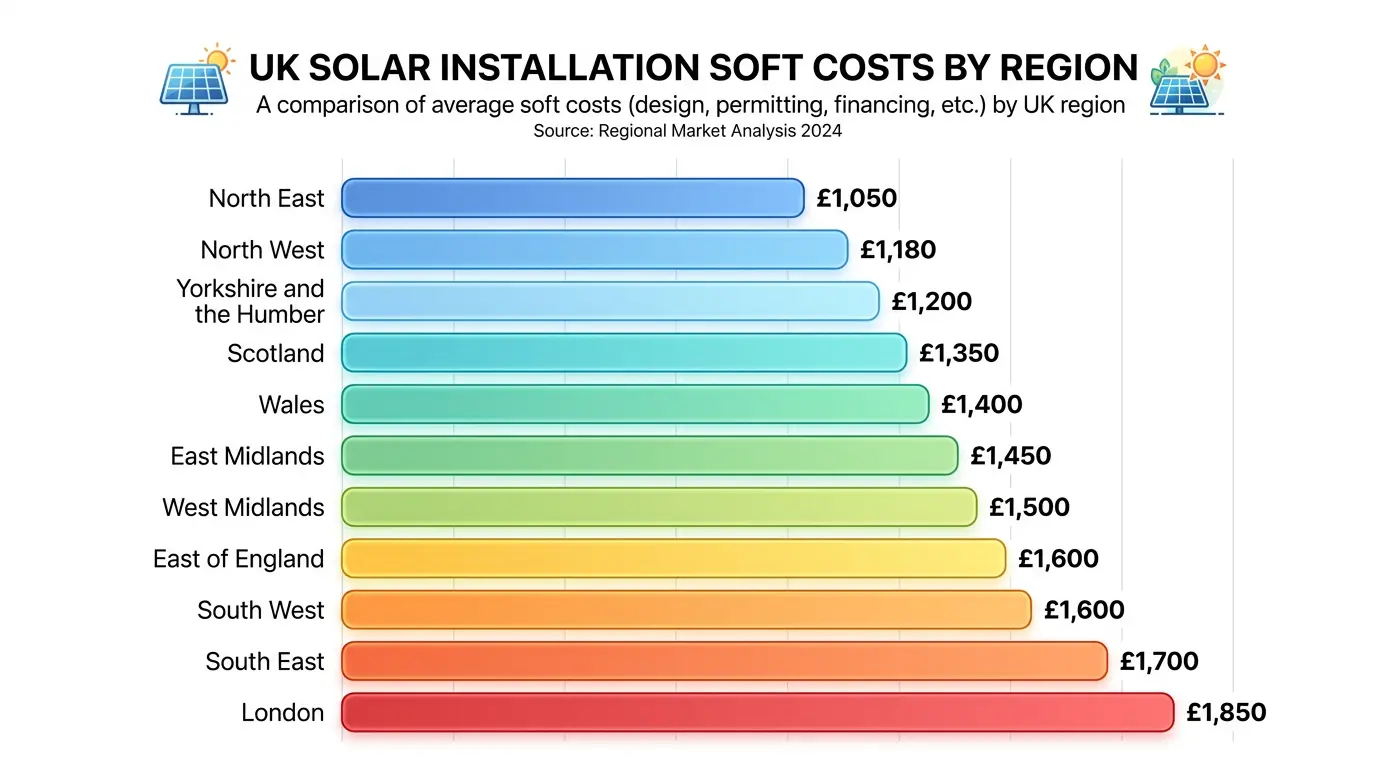
A 4 kWp solar system can cost £2,800 more in London than in the North East — and the panels are identical. The difference is "soft costs": permitting, grid connection fees, labour overhead, and planning friction. See the full breakdown by UK region.
Click a bar to see regional breakdown below.
Figures last verified:
What Are "Soft Costs" and Why Do They Matter?
Permitting & Admin
Building regulations notifications, permitted development checks, planning applications (listed buildings, conservation areas), and MCS registration paperwork all add cost before a single panel is installed.
Grid Connection (DNO)
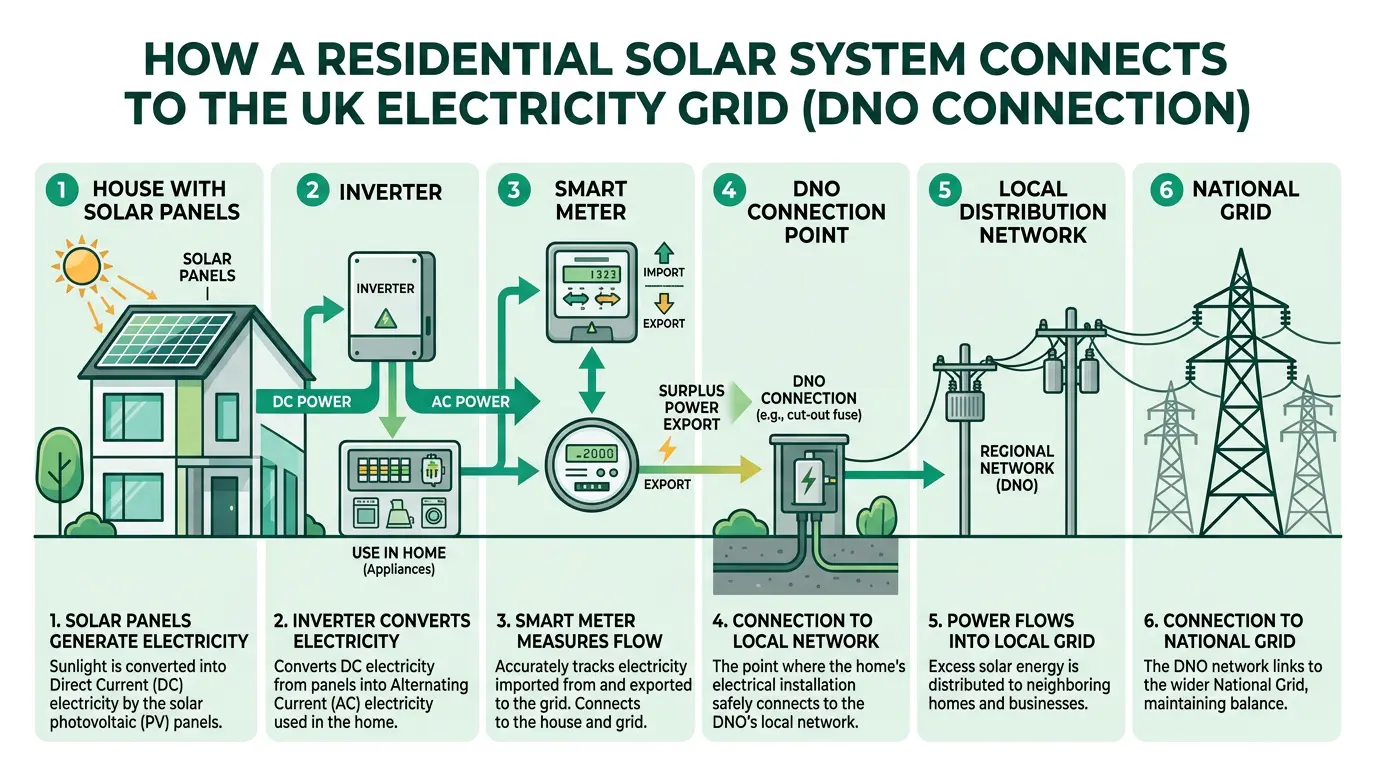
To export electricity under the SEG, your system must be registered with your Distribution Network Operator (DNO) — UK Power Networks, Northern Powergrid, National Grid, Electricity North West, SP Manweb, or SSEN. G98 notification costs vary by region and system size.
Labour & Logistics
Installer labour costs vary significantly by region. London carries a 25–35% labour premium over the national average. Rural properties in remote areas pay travel and accommodation premiums of £200–£400 per job. These costs are real — and never itemised in a quote.
UK Distribution Network Operators (DNOs) at a Glance
| DNO | Region | G98 Avg. Wait | Notes |
|---|---|---|---|
| UK Power Networks | London, South East, East | 8–10 weeks | Busiest UK DNO. Online portal improved 2024 but still slow for larger systems. |
| Northern Powergrid | Yorkshire, North East | 4–6 weeks | Strong performance; proactive with installer communications. |
| National Grid Electricity Distribution | South West, West/East Midlands | 5–8 weeks | Post-WPD acquisition, performance improving steadily. |
| Electricity North West | North West England | 5–7 weeks | Reasonable processing times; some delays in high-density areas. |
| SP Manweb | Wales, North West (partial) | 6–8 weeks | Variable by area; rural Welsh applications can take longer. |
| SSEN | Scotland (North), South East England | 7–9 weeks | Remote Scottish Highlands/Islands can face longer delays due to grid constraints. |
| SP Distribution | Scotland (South) | 6–8 weeks | Covers Central Belt — reasonable performance in urban areas. |
Frequently Asked Questions
Why do solar panels cost more in London than in Yorkshire?
The panels themselves cost the same — it's everything around them that differs. London installers pay London weighting on wages (25–35% above national average), face higher scaffolding costs, spend more time on planning paperwork (conservation areas, listed buildings are far more common), and deal with a DNO (UK Power Networks) that has some of the longest G98 processing times in the UK. Add in narrower access streets, harder parking logistics, and higher business overheads, and a £7,500 North East system becomes a £9,800+ London one.
What is a G98 notification and why does it cost money?
G98 is the technical standard for connecting small-scale generators (up to 3.68 kW per phase, typically ≤16A per phase) to the UK distribution network. For solar systems, your installer must notify your DNO before installation and receive confirmation before commissioning. The process involves submitting technical data, paying a registration fee (varies by DNO, typically £50–£250), and waiting for approval. Systems above G98 limits require G99 — a full application process that can take 3–6 months and cost £500–£2,000+.
What's the difference between G98 and G99 for solar?
G98 applies to "micro-generators" — systems up to 3.68 kW (single phase) or 11.04 kW (three phase). These can be installed with a simple notification to your DNO. G99 applies to larger systems and requires a full connection application with detailed engineering assessment. Most residential systems (4–6 kWp) fall into a grey area — technically G98 for single-phase properties, but your DNO may request G99 if the local grid has capacity constraints. Always ask your installer to confirm which applies before you commit.
Can I negotiate soft costs out of a solar quote?
Some are fixed (DNO fees are non-negotiable), but others have flexibility. Labour overhead is competitive — multiple quotes will reveal this. Scaffolding costs are genuinely negotiable if you're flexible on dates (scaffolding firms sometimes have gaps they'll fill at reduced cost). Some installers will waive or reduce travel costs if they're already working in your area. The key is to ask for a fully itemised quote and question any line items that seem excessive.
Does planning permission affect solar panel costs significantly?
For most UK homes, solar panels fall under permitted development rights — no planning application required. However, listed buildings (Grades I, II*, II), properties in conservation areas, World Heritage Sites, and National Parks often need full planning consent. A planning application costs £206 in England, £190 in Wales, plus architect/drawing fees (£300–£800) and waiting time (8–13 weeks). In the most restricted areas, planning refusal rates for solar are as high as 30%. For most homeowners this is a non-issue — but it's worth verifying with your local planning authority before getting quotes.
Explore More Solar Tools
Now you know what soft costs should be, check your actual quote for 16 red flags — inflated per-kWp pricing, warranty gaps, and more.
Factor your regional installation cost into a full payback projection. Uses MCS methodology, Ofgem Q4 2026 rates, and your system size.
High regional costs make "free solar" PPA pitches more tempting. Check any offer you've received for its Scam Probability Score first.
Get a Quote That Shows Every Cost
Our MCS-certified installers provide fully itemised quotes — no hidden soft costs, no surprises.
Get Free Solar Quote