Community Solar Finder
You don't need to own a roof to benefit from solar energy. Find co-operative schemes, group-buy programmes, and government grants designed for renters, social housing tenants, and low-income households across the UK.
Ripple Energy
Community Share OfferActiveCo-own a share of a wind or solar farm. Your share of generation is credited directly to your electricity bill — typically 10–20% cheaper. Open to renters and homeowners across England, Scotland and Wales.
Sharenergy
Co-operativeActiveA workers' co-operative helping communities set up and run their own renewable energy projects. Lists active community energy share offers across the UK.
Energy Local
Co-operativeActiveConnects households in the same community to local renewable generators. Members buy electricity directly from nearby solar/hydro at below-market rates — no investment required.
Warm Homes Local Grant (Solar)
Council SchemeActiveUp to £15,000 for eligible low-income owner-occupiers (EPC D–G). Covers solar panels, battery storage, heat pumps, and insulation. Delivered via local councils — check your local authority website.
Solar Together (group buy)
Council SchemeActiveCouncil-run group buying schemes for residential solar panels. Collective bargaining reduces costs 10–20% vs individual quotes. You must own your home. Available in Kent, Essex, East Riding, and others.
SEUK Community Energy Fund
Community Share OfferActiveIndustry fund supporting community solar projects. Helps lower-income communities access solar benefits through shared ownership structures with low minimum buy-ins.
Social Housing Decarbonisation Fund
Social HousingActiveGovernment fund for social housing providers to retrofit properties including solar panels. Renters in social housing benefit from lower energy bills without any investment required.
Community Benefit Funds
Community Share OfferActiveLarge solar and wind farms are required to contribute to local community benefit funds. These fund local energy efficiency projects, bill support for low-income households, and community solar initiatives.
Figures last verified:
Your Options If You Can't Install Panels
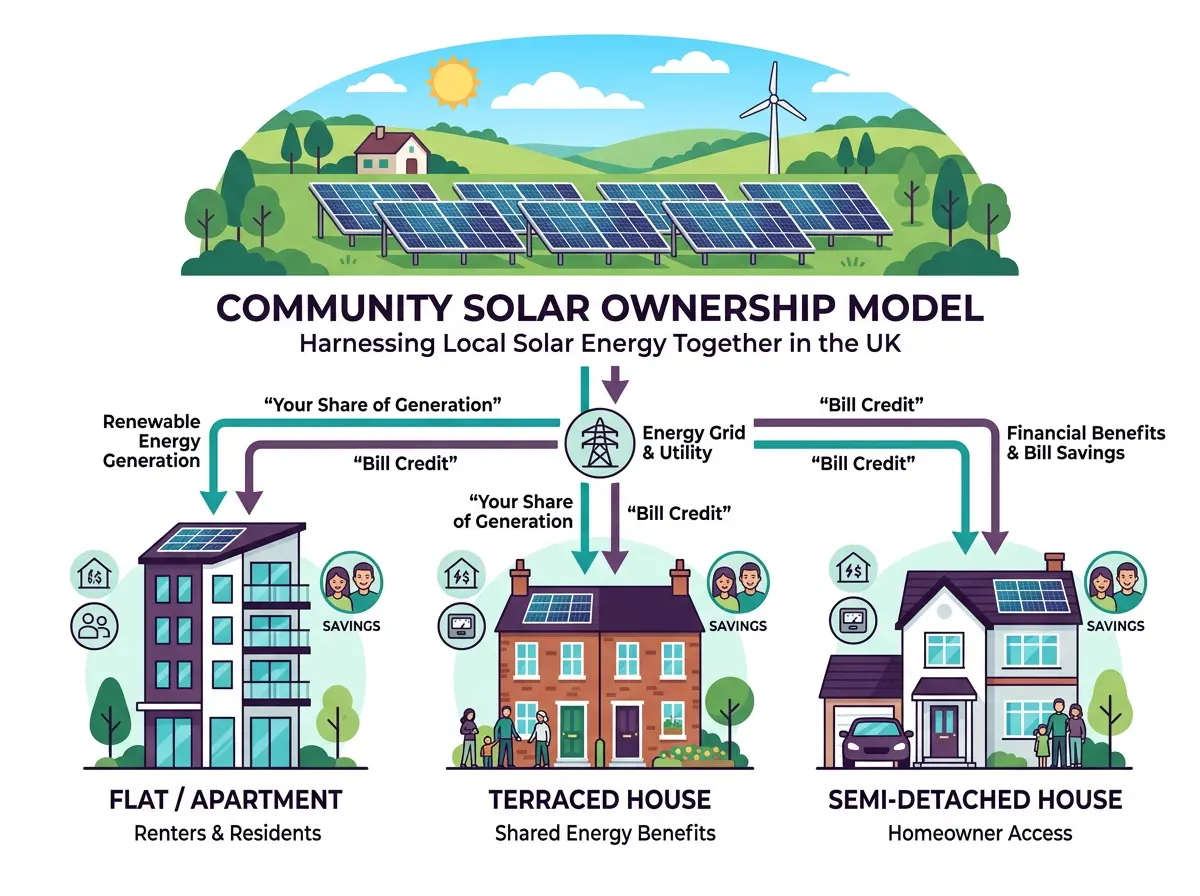
Community Share Offers
Companies like Ripple Energy let you co-own a share of a real UK wind or solar farm. Your ownership stake generates electricity credited directly against your bill — renters and homeowners both eligible. Minimum investments from £25.
Energy Co-operatives
UK co-operatives like Sharenergy and Energy Local connect communities to nearby renewable generators. Some operate on a "benefit from solar without buying in" model — ideal if upfront investment isn't possible.
Council Group-Buy Schemes
Solar Together and similar council-run schemes use collective bargaining to reduce solar installation costs by 10–20% for owner-occupiers. Not available to renters, but councils may use the savings to fund community energy projects.
Social Housing Retrofit
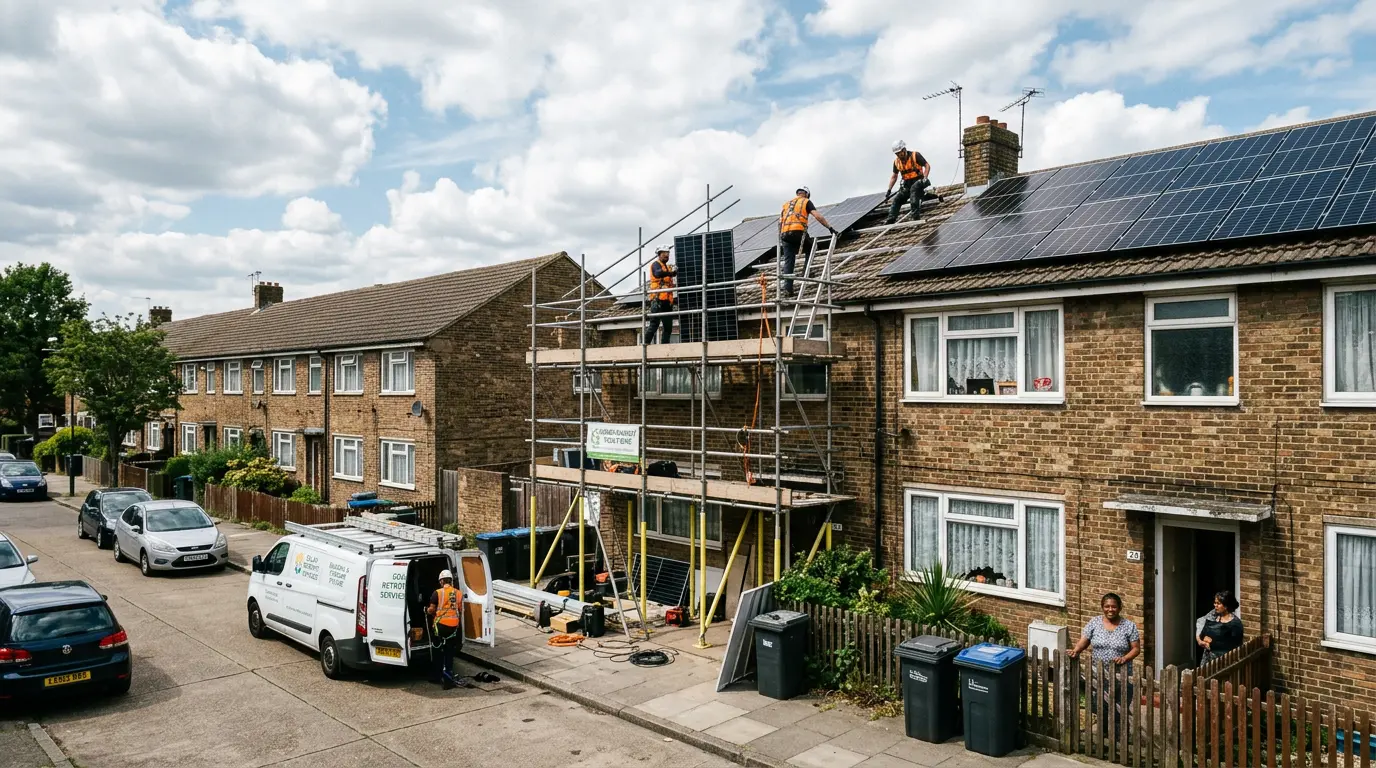
The Social Housing Decarbonisation Fund (SHDF) provides grants for housing associations and councils to retrofit properties with solar, insulation, and heat pumps. If you rent from a housing association, ask your landlord about SHDF Wave 3 (2025–2028).
Frequently Asked Questions
Can a private renter benefit from solar in the UK?
Yes — in several ways. Ripple Energy lets you co-own a share of a UK solar or wind farm from just £25, and your share's generation is credited against your electricity bill. Energy co-operatives like Energy Local can connect you to nearby renewable generators at below-market rates. Some social housing tenants benefit from council-funded solar panel installations under SHDF. The one thing renters cannot access is roof-mounted home solar — you need your landlord's permission and to own the property to install panels.
What is the Warm Homes Local Grant and am I eligible?
The Warm Homes Local Grant (launched April 2025) provides up to £15,000 for eligible low-income owner-occupiers with EPC ratings of D, E, F, or G. It covers solar panels, battery storage, heat pumps, and insulation. Critically, it is for owner-occupiers only — renters are not eligible unless their landlord applies. The grant is administered by local councils, so eligibility varies significantly by area. Check your local council's housing or energy pages, or search for your council on GOV.UK.
What is Ripple Energy and how does it work?
Ripple Energy is a UK company that allows individuals to co-own a share of a real renewable energy project — currently wind farms and increasingly solar farms. You make a one-off investment (typically £25–£500+ depending on how much of your bill you want offset). Ripple then operates the project and credits your electricity bill directly based on your ownership share's generation. Over time, the credit typically reduces your bill by 10–20% and pays back your investment in 7–10 years. Ripple is FCA-regulated and open to all UK electricity customers — renters included.
I live in social housing — can my landlord get free solar panels?
Possibly, yes. The Social Housing Decarbonisation Fund (SHDF) provides significant grants to housing associations and local councils to retrofit properties with solar panels, insulation, and heat pumps. Wave 2 funded over 100,000 homes. Wave 3 (2025–2028) has additional funding available. If you're a social housing tenant and your home is energy inefficient (EPC below C), ask your housing association or council whether they've applied for SHDF funding or plan to. The result for tenants: lower energy bills, potentially zero cost to the household.
Are community solar investments safe?
Community share offers and co-operatives in the UK are regulated by the Financial Conduct Authority (FCA) if they offer investment returns, and by the Co-operative Societies Act if structured as co-ops. Established operators like Ripple Energy, Sharenergy, and Mongoose Energy have strong track records. Risks include: project construction delays, lower-than-expected generation, and the inability to quickly sell your share. As with all investments, your capital is at risk. Always read the full share offer document before committing.
Explore More Solar Tools
If you do go roof-mounted, make sure you're getting the best export rate. Compare all UK SEG tariffs — Q2 2026 rates from 5.5p to 12p/kWh.
Before you commit to any scheme — community or owned — test your solar knowledge with 10 questions that could save you thousands.
Homeowner or soon-to-be? Calculate your exact payback period if you install roof-mounted solar using MCS methodology and Ofgem rates.
Own Your Home? Get a Free Solar Quote
If you're a homeowner, roof-mounted solar is still the most financially rewarding option. Get a quote from our MCS-certified installers.
Get Free Solar Quote