Floatovoltaics Viability Map
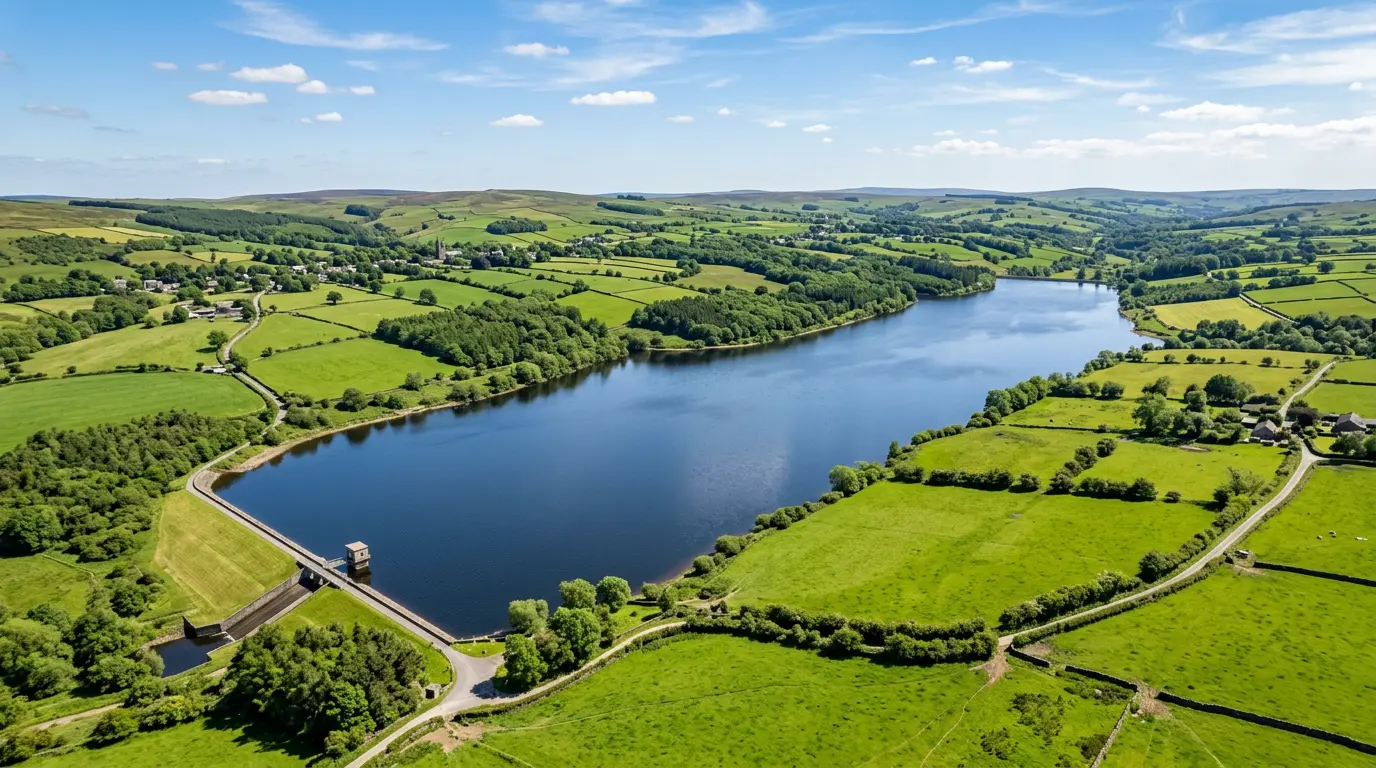
Britain's reservoirs cover over 25,000 hectares. Covering just 10% with floating solar panels could power over 1 million homes. We've scored 8 major UK sites on solar potential, planning feasibility, ecological constraints, and grid connection realism.
- ⚠SSSI designation requires Natural England consent
- ⚠Recreational sailing conflicts
- ⚠Bird nesting zones
Excellent. Large area, corporate operator with sustainability commitments, protected status manageable.
One of the largest man-made lakes in the UK. Anglian Water has publicly explored renewable energy options. The 10% coverage limit protects aquatic ecology and recreation. Estimated 12,500 panels at 10% = ~18 GWh/yr.
Figures last verified:
What Is Floatovoltaics?
Floating Solar Technology
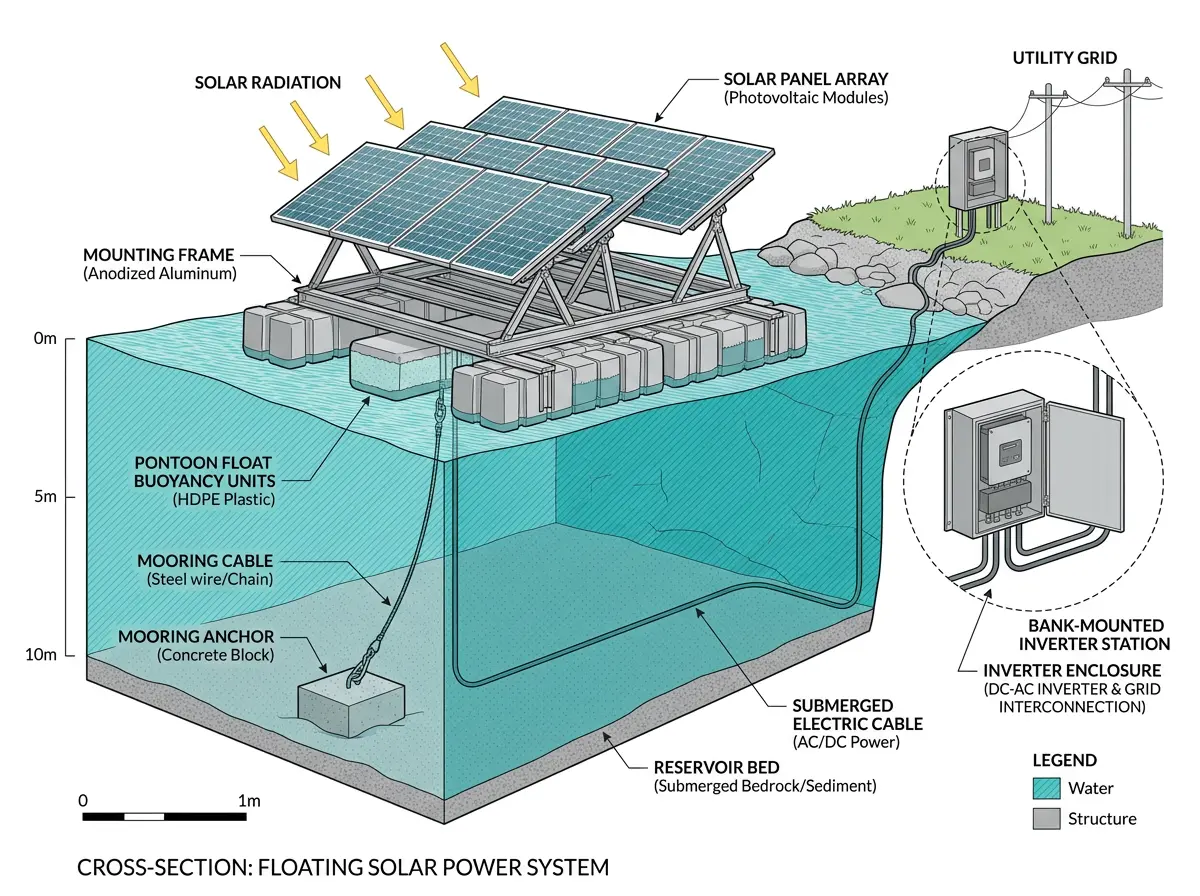
Floating photovoltaic (FPV) systems mount solar panels on buoyant pontoon structures on water bodies. The water beneath keeps panels cooler than land installations — improving efficiency by 5–15%. Systems are moored to the bed or anchored to the banks and connected via underwater cables.
Advantages Over Land Solar
Water cooling improves panel efficiency. No agricultural land consumed. Reduced evaporation (algae blooms decrease with less sunlight on water surface). Dual use of water infrastructure. Existing grid connections at water treatment works. Reduced planning visual impact vs open countryside.
Ecological Considerations
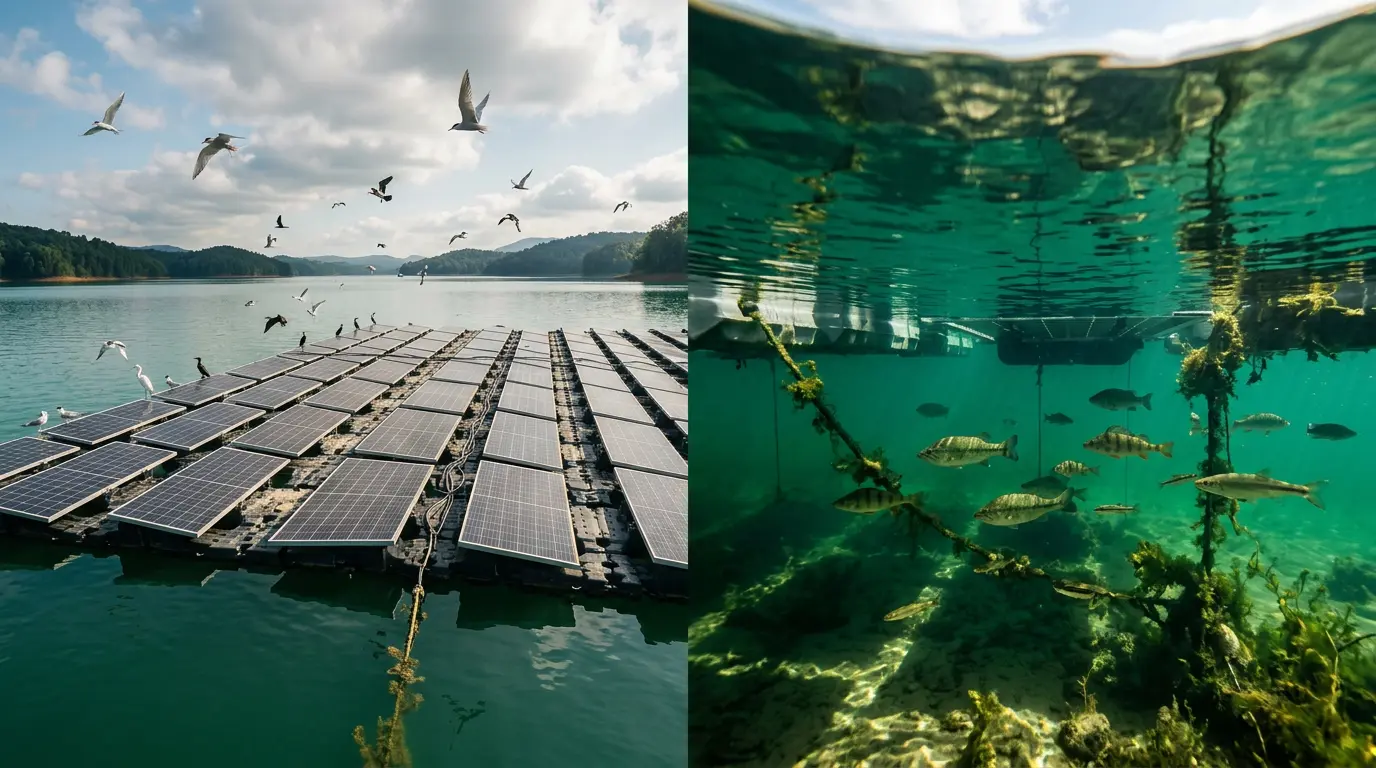
FPV can impact aquatic ecology through reduced light penetration, altered water temperature, and physical disruption of surface habitats. SSSI, SPA, and Ramsar designations protect many UK reservoirs' bird populations. Responsible FPV development requires 10% maximum coverage limits, seasonal access for migratory birds, and water quality monitoring.
Frequently Asked Questions
How does floating solar work on UK reservoirs?
Floating PV (FPV) systems use specially designed buoyant pontoon platforms that support solar panels over the water surface. In the UK, these are typically anchored to the reservoir bed using cables, with electrical output transmitted via marine-grade underwater cables to a junction box on the bank. Larger installations use inverters on floating platforms or on the bank. UK reservoirs, being typically man-made, already have grid connections serving water treatment works — which can often accept solar export without significant infrastructure upgrades.
Has floating solar been installed in the UK?
Yes. The UK has operational FPV installations — most notably the 6.3 MWp system at Queen Elizabeth II Reservoir in Walton-on-Thames (Thames Water, 2016 — one of Europe's first), and several gravel pit and quarry installations in the South East. As of 2025, the UK FPV pipeline has grown significantly, with projects at multiple operational reservoirs and numerous planning applications across England. The technology is proven; the constraint is planning, ecological consent, and operator appetite.
What planning permission does floating solar need in the UK?
FPV systems on reservoirs typically require planning permission from the local planning authority (LPA), as the water surface is generally not covered by the same permitted development rights as building-integrated or ground-mounted solar. For any site within or adjacent to an SSSI, SPA, SAC, or Ramsar site, consent from Natural England (or NatureScot/SNHRE in Scotland) is also required. Environmental Impact Assessment (EIA) is mandatory for FPV systems above 0.5 MWp. Ecological surveys (breeding bird, wintering bird, aquatic ecology) are typically required.
Does floating solar harm fish or wildlife?
Research shows mixed effects. Reduced light penetration can decrease algae growth (beneficial in eutrophic reservoirs) but may reduce food availability for some fish species. The floating structures provide shelter and foraging opportunities for some bird species. The main ecological concerns are for migratory birds using reservoirs as resting/feeding sites — panels covering more than 10–15% of a water body risk displacing these populations. Responsible FPV development includes seasonal access management and ongoing monitoring as a planning condition.
What is the UK's largest floating solar project?
As of 2025, the Sungrow-supplied 8.5 MWp project at Whittle Colliery (a former industrial lagoon, not a drinking water reservoir) is one of the UK's largest operational FPV sites. The 6.3 MWp Queen Elizabeth II Reservoir (Thames Water) remains the largest FPV system on a drinking water reservoir. Multiple projects in the 20–50 MWp range are in planning or early development across the UK (2025–2027), including sites in Cambridgeshire and Kent.
Explore More Solar Tools
Floating solar sidesteps land-use conflicts — but all solar creates end-of-life waste. See UK panel waste projections to 2050.
See how much solar energy your region is generating right now — translated into homes powered, CO₂ avoided, and trees planted.
Calculators, checkers, visualisers and quizzes — all the tools you need to make a smarter solar decision, free and without logging in.
Interested in Solar for Your Home or Business?
While we wait for UK reservoirs to go solar, you can start generating clean energy on your own roof today. Get a free quote from our MCS-certified installers.
Get Free Solar Quote