Solar Panels for Small Businesses: When Does a Smaller System Make Sense?
A smaller solar array may suit a small business better than filling its roof. Compare daytime use, export and marginal returns with an illustrative example.
Industry contributor · Matt Acraman is Managing Director of our commercial solar partner, Butterfly Eco.
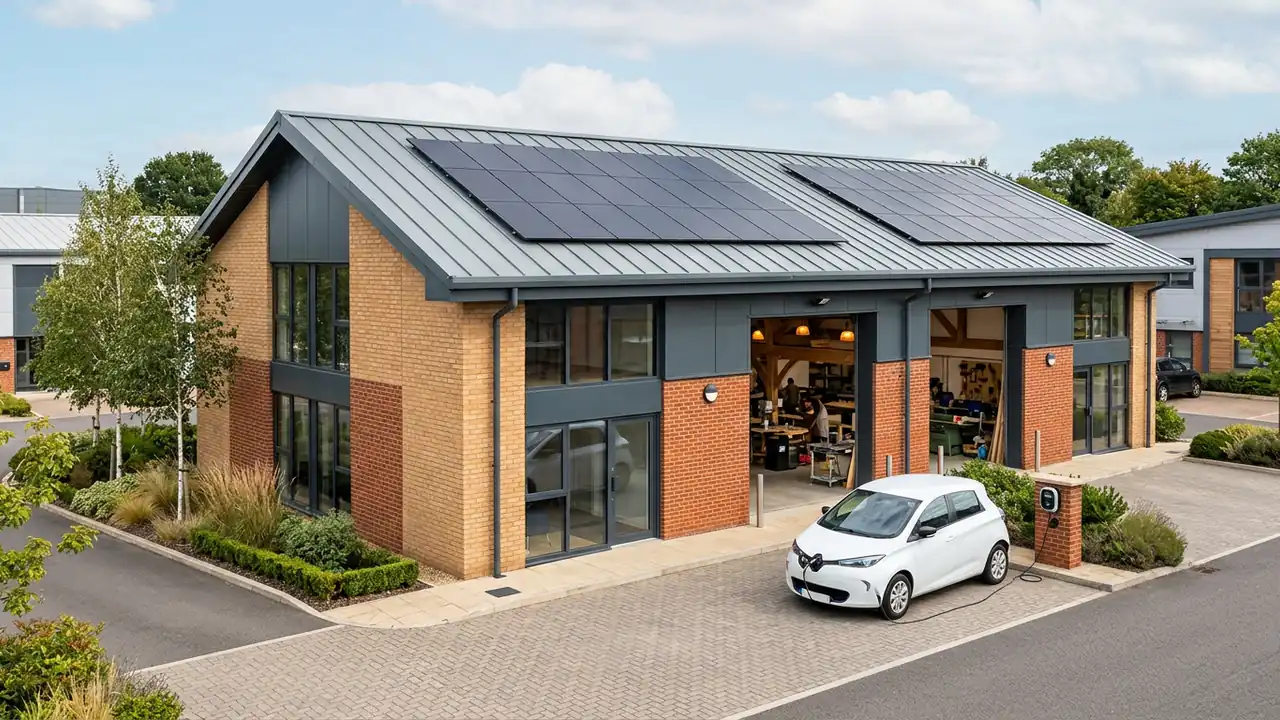
Commercial incentives can influence the solar systems businesses are offered. Whether the person presenting the proposal is called an agent, consultant, designer or sales representative, some sales arrangements reward larger installations. It is worth asking how a recommendation was arrived at.
That creates an incentive to maximise the roof and fill it with panels. But the largest system that fits your building is not necessarily the best investment for your business.
Let me explain why.
The value depends on where the electricity goes
Solar electricity used directly by your business reduces the electricity you need to buy from the grid.
Using an illustrative grid electricity rate of 25p per kWh, every kWh of solar electricity you generate and use on site saves approximately 25p in electricity purchase costs. It does not remove your standing charge.
Electricity you cannot use can be exported, subject to your agreed grid connection arrangements. However, the export payment may be considerably lower than the price you pay to buy electricity.
For this example, let us assume you receive 8p per kWh for exports. Your actual rate will depend on your supplier, tariff and eligibility.
That means the same kWh of solar electricity is worth:
- 25p when your business uses it directly.
- 8p when it is exported.
In this example, using the electricity yourself delivers more than three times the financial benefit of exporting it.
How this affects your return
Imagine two systems that each generate 30,000 kWh a year, but serve businesses with different electricity usage patterns.
| Annual generation | 80% used on site | 40% used on site |
|---|---|---|
| Electricity used directly | 24,000 kWh | 12,000 kWh |
| Savings at 25p/kWh | £6,000 | £3,000 |
| Electricity exported | 6,000 kWh | 18,000 kWh |
| Export income at 8p/kWh | £480 | £1,440 |
| Total annual benefit | £6,480 | £4,440 |
Both systems produce the same amount of electricity. But the business using more of it directly receives £2,040 more annual benefit.
If installation costs were the same, the system with higher on-site consumption would have a shorter simple payback and a higher annual return on its initial cost.
Why adding more panels can reduce value
As a system gets larger, it may generate increasing amounts of electricity that your business cannot use at the time it is produced.
Those additional panels still cost money to install, but more of their output may earn the lower export rate rather than replace higher-priced grid electricity.
The larger system could therefore deliver greater total annual savings and income while taking longer to pay for itself. You are spending more, but each additional pound invested may produce a smaller return.
This is why the installer should assess the benefit of the additional panels, rather than simply show that the whole project has an attractive payback.
When does a smaller system make sense?
A smaller system can make sense where it closely matches your daytime electricity demand, allowing you to use a high proportion of its generation directly.
This is particularly relevant for businesses with modest daytime consumption, limited weekend opening or seasonal closures. A large roof does not automatically mean a large daytime electricity requirement; roof suitability is a separate question.
However, the aim should not be to achieve the highest possible percentage of on-site use at any cost. A larger system may still be a good investment where the additional installation cost is relatively low, export payments are attractive or future electricity demand is expected to increase.
The proposal should compare sensible system sizes against your actual consumption profile, ideally using half-hourly electricity data where available. It should show installation cost, expected generation, on-site use, export income and payback for each option.
The question is not simply, “How many panels can we fit?”
It is, “What size system gives this business the best financial outcome?”
Ready to Take Action?
Planning solar for your business?
Explore your roof, electricity demand and procurement options with the commercial solar team. No obligation.
Request a Commercial Assessment →
Written by
Matt Acraman is Managing Director of Butterfly Eco Limited. Active in commercial solar since 2007, he works on solar project origination, financing and delivery for UK organisations.
Matt leads Butterfly Eco, a commercial solar partner of this site. Read his profile and articles.
View LinkedIn ProfileTools & Services Related to This Article
Explore business solar options, feasibility and financing.