Quick Summary
- No burner does not mean no maintenance: an air-to-water heat pump relies on clean circulating water and unobstructed outdoor airflow.
- A proper annual visit checks filters, pressure, frost protection, controls and any applicable cylinder safety devices; hypothetical efficiency losses are not evidence of a measured filter-only saving.
- Compare written service scope and manufacturer conditions, keep the digital service record, and send existing-system faults to the original installer or manufacturer.
The Misconception
With no burner or flue, an annual air source heat pump service is only an expensive wipe-down of the outdoor fan.
Table of Contents
No Burner, No Service? Look at the Water
"There's no burner to clean, so why pay someone £180?" It is a fair question when considering servicing an air source heat pump. The outdoor box has no flue. Yet the part worth inspecting may be inside the house, behind the radiator pipework.
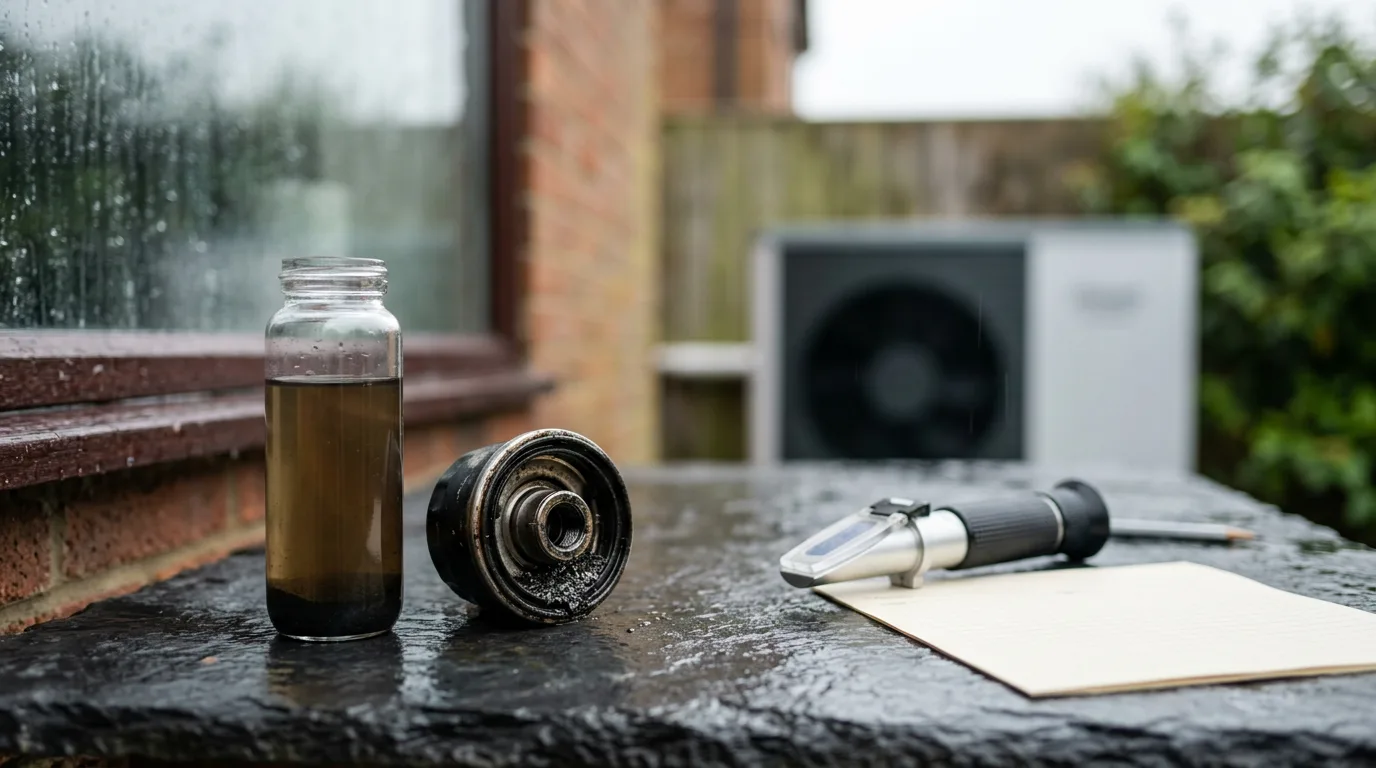
Picture a fictional homeowner in Harrogate. The year-two reminder appears; the unit still heats the house. They clear a few leaves and save the service fee. Inside, black residue collects in the magnetic filter, unseen.
Most air-to-water systems circulate heating water through radiators and strainers; some run protected water outdoors. British Gas's service checklist covers pressure, expansion vessel, filter, electrical safety, controls and, where applicable, the hot-water cylinder. Ask which checks your booking includes.
What Is the £180 Visit Actually Buying?
If the unit runs, can a dirty filter matter? Does every outdoor pipe need antifreeze? Could a missing record cost you a guarantee claim? The answers depend on your system and its terms, not an alarming percentage from a sales leaflet.
Put the quote beside your handover documents. Ask the engineer to show what was checked, measured and needs fixing separately. "All fine" is no substitute for readings.
Servicing an Air Source Heat Pump: Follow the Flow
Start with the heating water. A magnetic filter catches iron-rich magnetite; a mesh strainer catches other particles. Obstruction can restrict circulation. An engineer cleans these components, checks for leaks and air, then compares live flow with the specific manufacturer's limits. Repeated low-flow faults need diagnosis, not resets.
Pressure is another clue. The engineer checks it cold and may test the expansion vessel's pre-charge. A falling gauge could indicate a leak or flat vessel. Repeated tap-water top-ups can dilute inhibitor or glycol. Vaillant's guarantee terms require clean, inhibited water and adequate frost protection; contamination-related visits may be chargeable.
Chemistry varies. For glycol-protected monoblocs, the engineer samples fluid against the specified freeze protection. For water-filled systems, anti-freeze valves and exposed insulation need inspection instead. There is no universal -15°C target. Ask what protects your unit in a power cut. HHIC's October 2026 Benchmark update allows annual inhibitor results in the digital record.
Look for a recorded test, not an assumption that last year's fluid is fine.
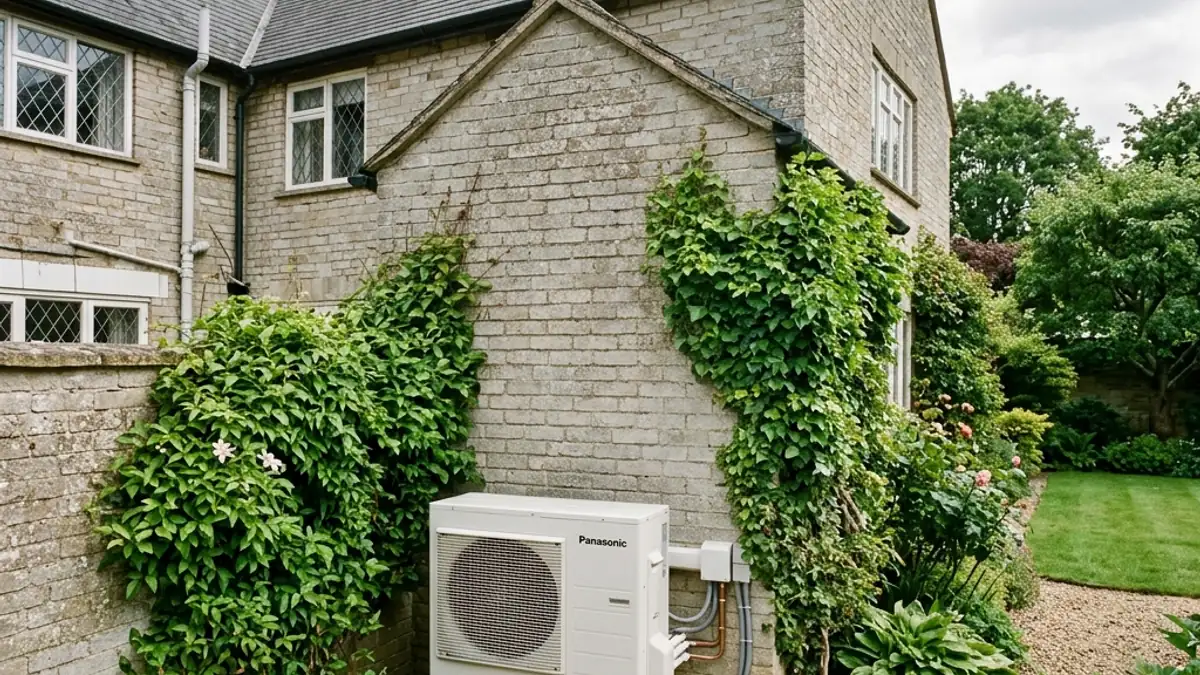
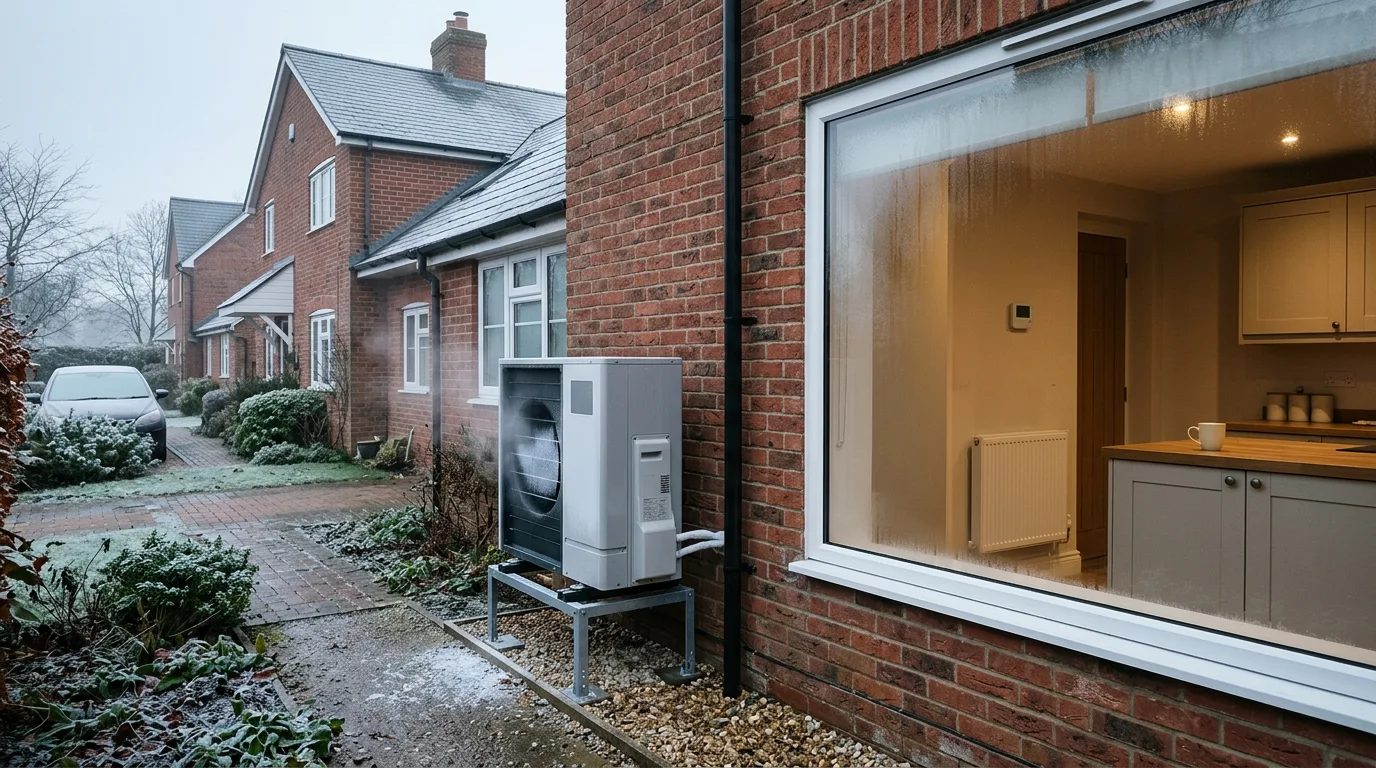
The outdoor coil needs air, not a glossy finish. An engineer checks for blocked airflow, damage and a clear defrost-water drain, plus electrical supply, fan, sensors, fault history and weather-compensation settings. Routine service does not mean opening a sealed refrigerant circuit. See our air source heat pump overview for design decisions that affect running costs.
| Part of the visit | What a useful check establishes | Ask to see |
|---|---|---|
| Magnetic filter and strainer | Whether debris is restricting the heating circuit | Debris found, cleaning done and any recommendation for further investigation |
| Water treatment and frost protection | Whether the installed inhibitor, glycol or anti-freeze valves remain suitable | Test result or valve check against the system's specification |
| Pressure and expansion vessel | Whether the sealed circuit holds pressure safely | Cold pressure and any vessel finding, with defects explained |
| Coil, fan and drain | Whether air and defrost water can pass freely | Obstructions cleared and damage or unusual icing noted |
| Controls and electrical checks | Whether settings and operation match the installation | Fault history, settings changed and reason for each change |
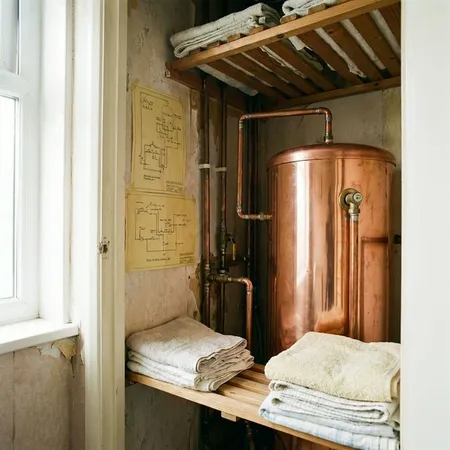
| Unvented hot-water cylinder, if fitted | Whether its separate safety devices need attention | Confirmation that a competent person checked the cylinder |
One caution about savings claims: there is no independent UK field measurement showing that cleaning a domestic magnetic filter alone moves seasonal efficiency from 3.0 back to 3.8. Flow, weather, emitter sizing and controls all affect performance. The table tells you what an engineer can inspect; it does not promise that every service pays for itself on your next bill.
Can a £200 Service Save £200 on Electricity?
It might, but there is no guaranteed saving. Suppose your home needs 12,000 kWh of heat annually. At an assumed seasonal efficiency (SCOP) of 3.8, the pump uses about 3,158 kWh; at 3.0 it uses 4,000 kWh. That 842 kWh difference costs about £222 at Ofgem's October-December 2026 average GB default-tariff rate of 26.32p/kWh, not necessarily your tariff.
The arithmetic is real; the cause is hypothetical. No measured filter-only SCOP drop of that size has been established. If bills rise, compare weather, usage, tariff and backup immersion settings first. Our SCOP explainer helps separate those effects.
Between visits, clear loose leaves from the outside of accessible grilles without removing guards. Note pressure and recurring fault messages. Persistent cylinder tundish discharge, falling pressure or leaks warrant a professional. Do not open electrical covers, strip filters or adjust safety valves. Normal defrost differs from persistent icing.
The Service Record That Matters More Than the Sticker
No blanket UK law requires every owner-occupier to service a domestic heat pump annually. But your manufacturer's guarantee may require it. Vaillant's terms say a missed annual service invalidates its heat pump guarantee; statutory rights remain separate. Other brands' conditions vary. Check your model's paperwork and our warranty guide before booking.
The paperwork has changed. HHIC said on 27 October 2026 that paper Benchmark records are no longer maintained; updates are digital. Keep older paper evidence, and ask how this visit's service and water-treatment results will be recorded and shared. A blank paper page does not prove no digital visit took place.
Price the scope. Checkatrade's September 2026 guide quotes £150-£300, averaging £200; local quotes differ. British Gas lists £189 one-off and two to three hours. It can service glycol systems, but its heating cover excludes them. Servicing and breakdown insurance are different purchases.
A low headline price means little until the included tests are named.
| Before you book | Ask the provider to confirm in writing |
|---|---|
| The unit and warranty | Your make/model is covered and their engineer meets its servicing conditions |
| Price and scope | VAT, travel, filter and water tests, cylinder work, and any glycol testing |
| Record | Which readings appear on the invoice and in Digital Benchmark or the manufacturer's service record |
| Faults found | Whether diagnostic time, parts, remedial flushes and return visits cost extra |
| Cylinder and refrigerant | Appropriate competence for unvented cylinder work, and specialist certification if refrigerant work is actually needed |
A cylinder is a separate appliance. Ask if your quote includes its safety devices and a G3-competent inspection where applicable. England's Approved Document G covers hot-water safety; requirements elsewhere in the UK differ. A "heat pump only" appointment may omit this work.
For an existing fault or overdue service, start with your original installer or manufacturer, then ask for a suitably trained local engineer if needed. Our quote-matching service is for new installations, not repairs or servicing. If you have not yet installed a heat pump, ask prospective installers about filter access, frost protection, cylinder safety and who will provide annual aftercare. You can find a local installer for a new installation and compare written answers, not just sticker prices.
What Should You Do Before the Next Winter?
Keep the simple rule: no burner does not mean no maintenance. Once a year, ask a competent engineer to check the water circuit, frost-protection method, outdoor airflow, controls and any unvented cylinder that is actually in your system. Then keep the readings, invoice and current service record together. That is more useful than either an unexamined £180 renewal or an empty promise that the machine is "maintenance-free".
If something is already wrong, book diagnosis now rather than waiting for an annual appointment. If nothing seems wrong, check the manufacturer's actual schedule and your last service date, then book with a provider who can explain the scope. And if you are still shopping for a heat pump, put maintenance access and aftercare beside efficiency on the installation quote. It is easier to ask about a removable strainer before the pipework is boxed in.
Key Takeaways
- Annual check: Many manufacturer guarantees require a service every 12 months; check the specific contract rather than assuming every system has the same terms.
- UK cost: Checkatrade's September 2026 range is £150-£300 with a £200 average; British Gas lists a £189 one-off service, subject to scope.
- Time on site: British Gas says a typical appointment takes two to three hours, not a five-minute wipe-down.
- Bill example: 12,000 kWh of annual heat at SCOP 3.8 versus 3.0 differs by about 842 kWh, or £222 at Ofgem's October-December 2026 average 26.32p/kWh; this is a scenario, not a measured filter effect.
- Freeze protection: Glycol concentration targets and anti-freeze valve arrangements depend on the installation; there is no universal UK percentage or temperature.
- Paper trail: HHIC said in October 2026 that paper Benchmark records are no longer maintained; request access to the digital service and water-treatment record.
- Separate scope: Ask whether the quoted price includes the hot-water cylinder, remedial work and glycol testing; a service is not breakdown cover.
Frequently Asked Questions
How often should an air source heat pump be serviced?
Usually every 12 months, following your particular manufacturer's instructions and guarantee terms. There is no blanket annual servicing law for every UK owner-occupied domestic heat pump. Check the installation date, model-specific schedule and written terms; ask the engineer how each visit and the water-treatment results will be recorded.
How much does heat pump servicing cost in the UK?
Checkatrade's September 2026 ballpark range is £150-£300, averaging £200. British Gas lists a £189 one-off visit. Ask if VAT, travel, filter and water tests and cylinder work are included. Repairs and parts may cost extra, so request the full scope in writing.
Does missing an annual service void my warranty?
It can affect a manufacturer's guarantee: Vaillant's published terms explicitly require annual servicing and say its heat pump guarantee becomes invalid if that condition is not met. Terms differ across brands and models; verify yours before assuming a claim will be rejected. Keep invoices and the current Benchmark or manufacturer record. Statutory consumer rights remain separate.
What happens if you do not service a heat pump?
Debris, pressure loss or poor frost protection can go unnoticed and eventually cause faults; missing one appointment does not automatically mean failure. Inspect accessible grilles, note unusual pressure or repeated faults, and ask a competent engineer to check the circuit and your guarantee terms.
Can I clean the magnetic filter or test glycol myself?
A homeowner can clear loose leaves from an accessible external grille and note readings or fault messages. Isolating and opening a pressurised heating circuit, sampling chemicals, checking electrical components or operating unvented-cylinder safety devices belongs with a suitably competent engineer. Ask for measured results rather than attempting repairs that could create leaks or compromise cover.
Does every air source heat pump need an F-Gas check?
No. A routine heat pump service is not automatically a statutory refrigerant leak check. Refrigerant type, charge, whether the circuit is hermetically sealed and the applicable threshold all matter. Ask your installer what your model requires; if refrigerant work is necessary on an F-Gas system, use a properly certified specialist, not an unqualified general service provider.
Ready to Compare Real Quotes?
Does your home qualify for the BUS grant?
Check eligibility and compare quotes from local MCS-certified installers — up to £9,000 off, no obligation.