Quick Summary
- Solar without battery storage need not waste surplus generation: eligible metered exports can be paid under a supplier-specific tariff.
- Storing solar may avoid later imports, but it forgoes export revenue and loses energy in the process.
- Compare the battery's incremental installed cost against its additional annual value under your own consumption and available tariffs.
The Misconception
Without a battery, surplus solar electricity is given away for nothing, so adding storage is always the financially better choice.
Table of Contents
The Quote That Calls Your Export a Loss
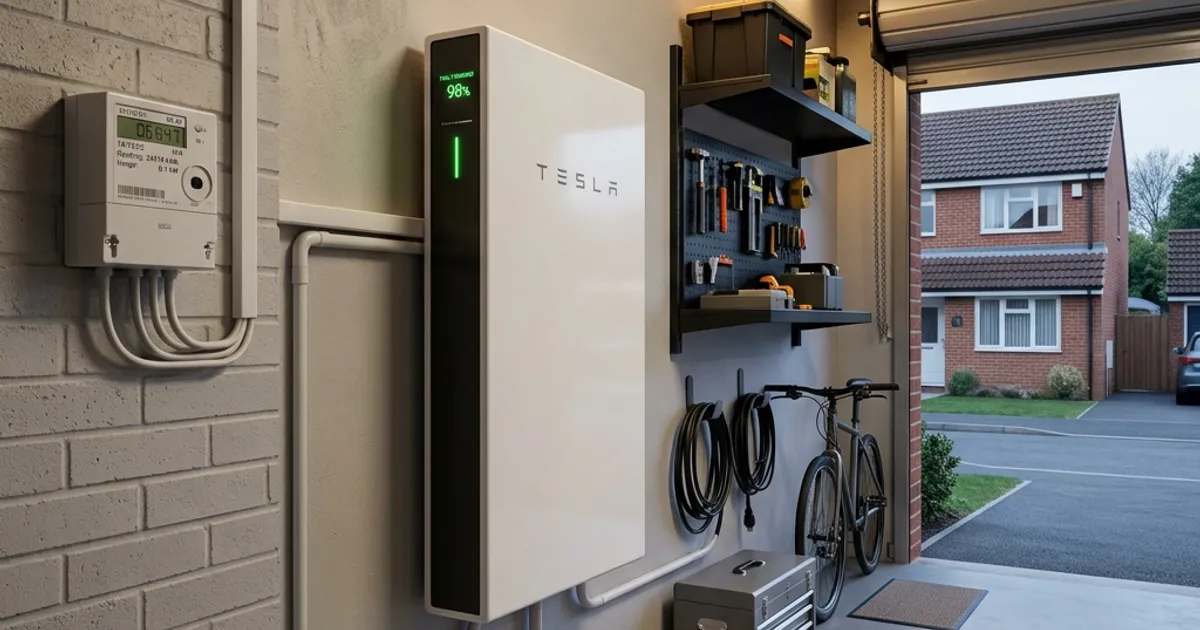
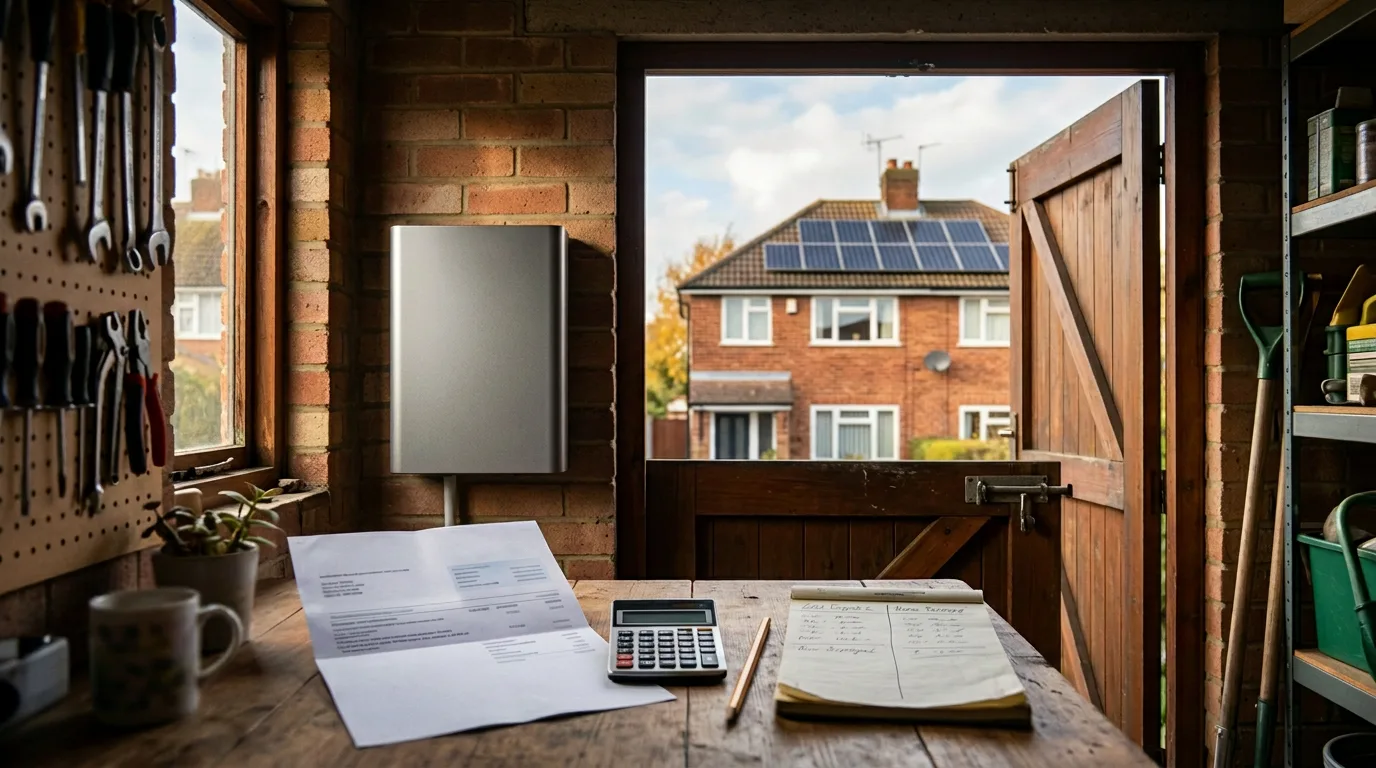
"Solar without battery storage? You might as well give your electricity away." That line sounds convincing when a second solar quote adds a tidy box on the garage wall and promises to keep every spare unit for the evening. But the paperwork has a missing column: what would the grid pay for those units instead?
Picture an explicitly fictional St Albans commuter with two proposals: panels alone, or panels plus battery. The battery quote boasts higher self-use but omits lost export income and the price difference. These are invented proposals, not documented households.
The instinct to save every last unit is understandable. It is also a poor way to compare two investments. Under the Smart Export Guarantee (SEG), eligible generators in Great Britain can be paid for metered exports. Ofgem requires SEG rates above zero but lets suppliers set their own rates, contract lengths and other terms. Export is not necessarily free electricity handed to your supplier.
Nor does a battery automatically lose. The question is narrower and more useful: what extra value will this battery create, after export income you give up, conversion losses and its additional installed cost?
If Export Pays, What Is a Stored Unit Really Worth?
Suppose you generate a spare unit at noon and need electricity after sunset. Exporting earns a payment; storing might avoid a later import. You cannot claim both benefits for that same unit. What if the meter pays more than the battery quote assumes, or the battery delivers less than you put in?
Octopus Energy's export tariff page currently lists its variable Outgoing tariff at 12p per kWh and its basic SEG offer at 4.1p per kWh. These are different supplier offers, not a universal UK export rate or a promise of eligibility. Which one could you actually take with your import tariff and equipment? How much electricity would reach your appliances after storage? Those answers matter more than a brochure's self-consumption percentage.
Solar Without Battery Storage Still Has Two Income Paths
Solar used immediately avoids imports; eligible metered exports can earn a payment. Storage moves some surplus into later use, after losses, instead of earning export income. Check supplier eligibility before applying a headline rate to your surplus.
Here is a hypothetical teaching model, not a tariff recommendation, household result or forecast. Assume a solar array generates 4,275 kWh in a year; 1,496 kWh is used immediately and 2,779 kWh is surplus. Both proposals have the same panels, roof, demand and direct self-use. Assume imports cost 25p/kWh, an eligible export tariff pays 12p/kWh for metered exports, and a battery diverts 1,710 kWh of annual surplus. At an assumed 90% round-trip efficiency it delivers 1,539 kWh later and 171 kWh is lost in the process. Every one of these figures is an input to a worked example, not an Ofgem price-cap rate, an MCS estimate or measured household data.
| Annual solar electricity in this illustrative model | Panels alone | Same panels plus battery |
|---|---|---|
| Used directly, avoiding imports | 1,496 kWh | 1,496 kWh |
| Diverted into storage | 0 kWh | 1,710 kWh |
| Delivered from storage later | 0 kWh | 1,539 kWh |
| Lost in storage | 0 kWh | 171 kWh |
| Exported | 2,779 kWh | 1,069 kWh |
The battery does not make another 1,539 kWh of solar. It moves some of the same generation to a different hour. For this example, the extra annual value against panels alone is:
1,539 kWh × 25p avoided import - 1,710 kWh × 12p forgone export = £384.75 - £205.20 = £179.55.
Notice the asymmetry. The import saving is on the delivered 1,539 kWh; the missed export payment is on the diverted 1,710 kWh. Applying the 13p difference between tariff rates to all stored units would hide the 171 kWh loss. Direct solar use is identical in both proposals and must not be counted as a battery benefit.
Assume an illustrative £4,600 extra installed cost: £4,600 ÷ £179.55 is 25.6 years of simple marginal payback, before financing, upkeep, degradation or changing rates. This says nothing about typical quotes or actual battery life. Use your itemised installed price instead.
Change just the export offer to the separate 4.1p Octopus basic SEG example, leaving the deliberately hypothetical 25p import price and energy flows unchanged. The foregone export becomes £70.11, and the extra annual value becomes £314.64 (£384.75 - £70.11). At the same assumed £4,600 premium, simple marginal payback is about 14.6 years. This is a sensitivity check, not evidence that moving to a lower export tariff makes you richer overall. The panels-alone option also earns less export income at 4.1p. Compare complete bills and tariff eligibility, not just battery payback.
The Missing Column on Your Own Quote
When you read a proposal, look for separate lines for generation, electricity used as it is generated, units stored, units later delivered, units exported and import avoided. If its "battery saving" adds the full retail value of stored solar but leaves exports unchanged, ask the installer to redo it. The same unit cannot be sold and consumed.
You need hourly or half-hourly assumptions, not just annual totals. On a dull winter day there may be little surplus to charge from solar; on a bright summer day a small battery could fill quickly. That does not prove all batteries are too large or all solar-only systems work equally well. Your roof, daytime occupancy, evening load and tariff determine the answer. The Energy Saving Trust's solar guidance describes using generation at home, storing it or exporting it; a site-specific generation estimate and your demand profile put those paths into pounds and pence.
Check a quote's import unit price, standing charge, grid-charging costs and export eligibility. Ask for the same array in both versions with an itemised price difference. Octopus illustrates a 12-panel, 10 kWh package at £11,115 on its export page, based on July 2026 prices; it does not establish the battery's incremental cost on your roof.
For a wider price sense-check, DESNZ solar PV cost data reports aggregate installed solar costs per kW from MCS records. It does not verify a specific solar-only quote, a battery premium or the fictional prices used above. Different roof work, access, inverter choices and installer scopes can change your total substantially.
When the Battery Has a Job Worth Paying For
A battery may help when measured surplus overlaps later demand, your real export offer pays little, or a compatible time-of-use arrangement suits you. None is a universal threshold. A heat pump or EV changes demand, but an EV charging at noon may use solar directly. Usable battery capacity and output also limit evening delivery.
Grid charging is a separate calculation. To evaluate an overnight tariff, compare the full import schedule, standing charge, export eligibility and any conditions with your present plan. Include charging losses: buying 1 kWh overnight does not necessarily deliver 1 kWh later. Rates can change, equipment may not support the required controls, and grid-imported power must not be labelled as stored solar. Our battery storage shift calculator helps you test timing scenarios; it does not guarantee an arbitrage return.
Another legitimate reason to consider storage is resilience, but do not buy a standard grid-connected battery expecting automatic power during an outage. Backup requires a suitable design, controls and identified circuits. See the battery and power-cut explainer and request the installer's written backup specification if that matters to you.
What about a network export limit? Get the DNO conditions in writing. Storage is not automatically mandatory: a full battery can still leave surplus to be curtailed. Ask the installer to compare generation, permitted export, demand-shifting and storage for your connection.
There is a sensible middle route if your household habits may change: start with panels and price the cost of making a later battery addition practical. Ask for both a standard inverter and a suitable hybrid option, its compatibility with a future battery, usable capacity limits, space, electrical work and any retrofit labour. A hybrid inverter is not a promise that any future battery simply plugs in or that retrofitting is free. Equally, you do not have to buy a battery now to secure VAT relief: HMRC Notice 708/6 includes qualifying installed standalone batteries as well as solar panels at 0% VAT until 31 March 2027, reverting to 5% from 1 April 2027 under the current rules. Supply of equipment without installation is treated differently.
The Better Question to Take to the Installer
The fictional commuter does not need a verdict from a percentage on a sales slide. They need two comparable, site-specific quotations and an explanation of what changes between them. You can ask for the panel-only return and then the additional annual value of the battery, after lost export payments and losses, over the battery's additional installed cost. Ask for a low-export and high-export sensitivity check using offers you can actually access.
Our solar payback calculator is a starting point for checking generation, self-use, prices and export assumptions. For a proposed system, request the installer's own time-based estimate, warranty terms and itemised costs. Compare solar quotes when you are ready to have the same assumptions priced by different installers; do not mistake a general calculator for a guaranteed return.
Solar without a battery is not automatically wasted solar. Pay for storage when its extra service, under your own tariff and demand, is worth its extra cost.
Key Takeaways
- SEG export is not automatically zero: Ofgem requires eligible SEG rates above zero, but suppliers set their own rates and terms.
- 12p and 4.1p are different Octopus offers listed on its export page, not standard rates for every household.
- The right comparison is marginal: value of avoided imports on electricity delivered minus export revenue forgone on electricity diverted into storage.
- In our hypothetical example, 1,710 kWh diverted into storage delivers 1,539 kWh at an assumed 90% efficiency.
- £179.55 a year is the hypothetical battery's incremental value at 25p import and 12p export, not a predicted household saving.
- £4,600 ÷ £179.55 ≈ 25.6 years is illustrative simple marginal payback, excluding future changes and costs.
- A cheap overnight tariff is not free money: include input electricity, losses, eligibility and the full tariff when testing grid charging.
- Installed batteries can be bought later: HMRC's current 0% VAT relief covers qualifying standalone installations until 31 March 2027.
Frequently Asked Questions
Are solar panels worth installing without a battery?
They can be. Electricity used as it is generated reduces imports, and eligible metered exports can earn a supplier-specific SEG payment. Compare your own roof's expected output, daytime demand, import price, available export contract and installed quotes. A battery can add value, but its extra cost must be tested against its extra benefit.
How much do you get paid for solar export without a battery?
Ofgem requires SEG tariffs to pay above zero but does not prescribe one national rate. As checked on 14 November 2026, Octopus lists its Outgoing offer at 12p/kWh and basic SEG at 4.1p/kWh. Eligibility and terms differ, and rates can change. Check the current contract and export metering before modelling income.
Can I install solar now and add a battery later?
Often yes, subject to your installation design and later equipment compatibility. Ask the installer what a battery-ready inverter would cost now, which batteries it can support, and what additional electrical work a retrofit would require. HMRC's present temporary zero rate also covers qualifying installed standalone batteries, not just batteries supplied alongside panels.
Does adding a battery double my solar savings?
Not automatically. Stored solar may avoid later imports, but diverting it means foregoing any export payment, and some energy is lost between charging and delivery. Compare itemised panel-only and panel-plus-battery estimates under the same generation and household demand. Work out the battery's incremental annual benefit against its incremental installed cost, not its self-consumption percentage.
Is a battery compulsory if my DNO restricts exports?
No general rule says it is. A restriction may mean some surplus is curtailed, but you can ask your installer to model timing changes, array sizing and any permitted export as well as storage. A full battery cannot absorb further surplus. Request the actual DNO conditions and site-specific calculations before accepting a claim that storage is mandatory.
Ready to Compare Real Quotes?
Compare solar & battery quotes side by side
Get itemised quotes from up to 3 local MCS engineers with 0% VAT applied — free, no obligation.