What's Changing for UK Solar Panels and Heat Pumps in October 2026?
October 2026: Ofgem sets the price cap at £1,723, electricity VAT falls to 0%, and heat pump grants reach £9,000 for eligible off-gas homes. Compare your options.
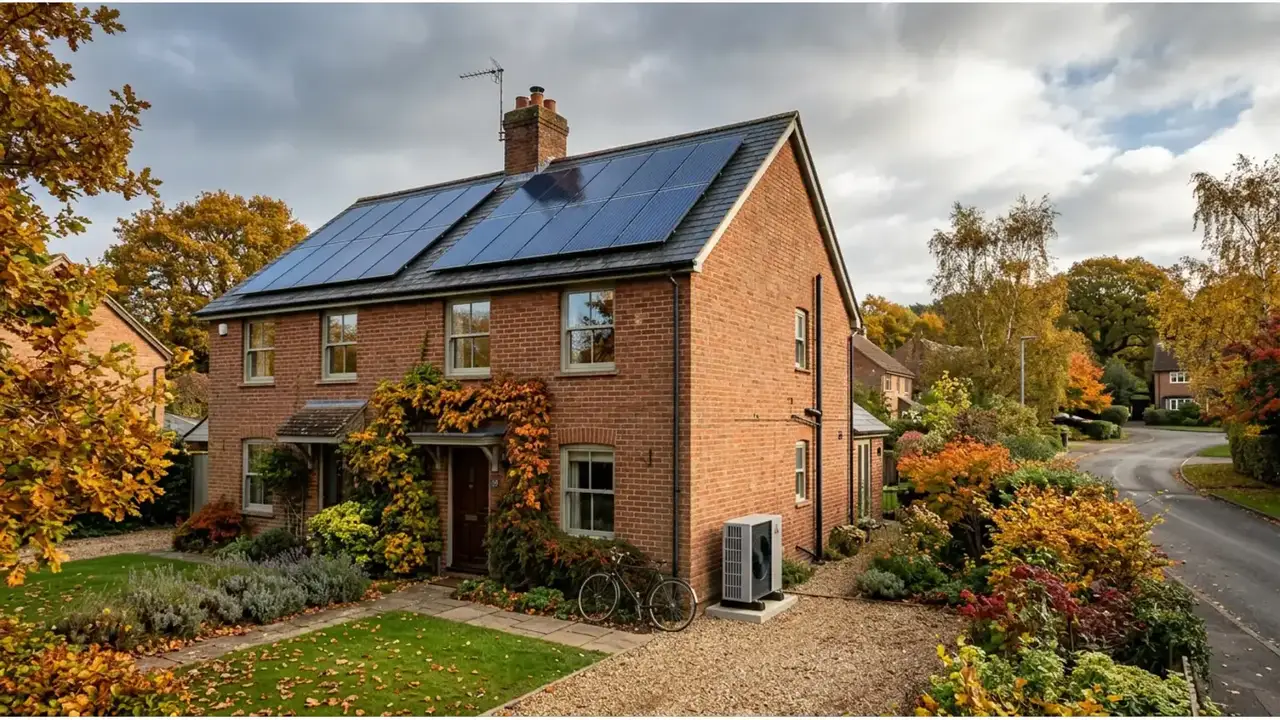
October 2026 at a Glance
- £1,723 - Ofgem's Q4 price cap for a typical dual-fuel direct-debit household rises £60 compared with July to September.
- 0% electricity VAT - Domestic electricity bills carry no VAT from 1 October 2026 to 31 March 2027; gas still carries 5% VAT, according to Ofgem.
- £9,000 - Eligible off-gas homes replacing oil or LPG can claim the temporary higher Boiler Upgrade Scheme heat pump grant until 31 March 2027.
The October 2026 UK solar and heat pump update starts with two numbers that pull in opposite directions: the typical annual price cap rises to £1,723, yet the electricity standing charge falls. Gas is the bigger mover. If you are comparing solar panels, a battery or an air source heat pump, the split between the two fuels matters more than the headline annual figure.
Right, let's separate decisions you can make today from promises still being worked out. Ofgem's October rates are confirmed. A January rise is an analyst forecast, not the next official cap. Heat pump grants exist now for eligible homes, but the much-discussed government-backed consumer loans are not a live product to put into a quote.
There is another practical change this autumn: compliant plug-in solar can now be sold and used under a new safety framework. That does not mean any panel and plug from an online marketplace is safe or legal to connect. Here is what the verified changes actually mean for a household budget.
October's Price Cap: Gas Rises Faster Than Electricity
Ofgem confirms that the cap for 1 October to 31 December 2026 is £1,723 a year for a typical dual-fuel home paying by Direct Debit in Great Britain, up from £1,663 in the previous quarter. It is an illustration at typical consumption, not a cap on what any one household can spend. Actual bills depend on usage, region, tariff and payment method. The national average unit rates and standing charges are:
| Direct Debit national average | July-September 2026 | October-December 2026 |
|---|---|---|
| Typical annual dual-fuel cap | £1,663 | £1,723 |
| Electricity unit rate | 26.11p/kWh | 26.32p/kWh |
| Electricity standing charge | 57.19p/day | 54.83p/day |
| Gas unit rate | 7.33p/kWh | 7.97p/kWh |
| Gas standing charge | 29.04p/day | 29.68p/day |
Ofgem cautions that the quarters are not directly comparable on a like-for-like tax basis: from October the electricity figures include a temporary zero VAT rate, while gas still includes 5% VAT. The roughly 8.7% gas unit-rate rise and 0.8% electricity unit-rate rise still tell you which fuel is under greater pressure. For solar owners, each self-consumed kilowatt-hour replaces electricity you would otherwise buy; export earns a different, generally lower rate. Put your own consumption and roof details into our solar payback calculator rather than applying the £1,723 figure to your home.
Looking ahead, Cornwall Insight's 30 September projection puts the January to March 2027 typical cap at about £1,999, around 16% above October's figure. This is a forecast, not an Ofgem decision or a guaranteed bill. Wholesale prices and policy can change before January's cap is set, so do not commit to an installation solely on that projection.
The VAT Cut Is on Electricity Bills, Not a New Solar Grant
From 1 October 2026 to 31 March 2027, Ofgem's published capped electricity rates reflect 0% VAT; its gas rates still include 5%. That temporary bill change is separate from VAT treatment of installing energy-saving materials. It does not give households a cheque towards panels, batteries or a heat pump.
What this means in practice
An electricity VAT cut lowers the retail rate you avoid when using your own solar power. Keep the import tariff, export payment and any battery charging rate separate in your payback calculation. Compare your actual supplier bill, not just a national cap average.
Solar Export: Check the Conditions Behind the Headline Rate
The Smart Export Guarantee pays for eligible electricity sent to the grid, but there is no single national SEG unit price. Octopus Energy currently advertises its standard Outgoing tariff at 12p/kWh, variable rather than fixed. Prime Outgoing advertises 16p/kWh between 4pm and 7pm and 9p/kWh at other times, subject to its tariff and import-pairing conditions. That peak rate only helps if your system can actually export during the evening window.
| Supplier offer | Advertised export rate | Important condition |
|---|---|---|
| Outgoing Octopus | 12p/kWh | Variable rate; compatible Octopus import account and working export smart meter |
| Prime Outgoing | 16p/kWh, 4pm-7pm; 9p/kWh otherwise | Time-of-use export; check pairing and timing |
| Good Energy Solar Savings Exclusive | 25p/kWh for 12 months | Solar and battery installed by Good Energy or named partners, Good Energy electricity import and smart meter |
The 25p figure is not a generally available export price: Good Energy restricts its exclusive offer to customers with its qualifying solar-and-battery installation and electricity supply. Rates can change for new applicants. Compare the entire import-and-export package, including standing charges, before choosing an installer to qualify for an export tariff. A home battery may help shift usage or export, but its value depends on your actual generation, load and tariff, not a headline peak price.
Check the meter too. Government figures to June 2026 report 42 million smart and advanced meters across homes and small businesses, with 92% of the 40 million smart meters operating in smart mode. These are meters, not 42 million homes. Octopus specifically requires a smart meter it can read for half-hourly export, so ask your supplier whether your meter can send export readings before assuming a tariff is available.
How much of your solar will you use at home?
Model self-consumption, export and installation cost using your own roof and bill figures.
Calculate solar paybackGrants and Policy: What Is Available This October?
For eligible homes in England and Wales, the Boiler Upgrade Scheme offers £7,500 towards a qualifying air-to-water or ground-source heat pump. The temporary £9,000 level applies to eligible off-gas-grid properties replacing oil or LPG heating from 21 July 2026 to 31 March 2027. Energy Saving Trust also lists a £2,500 air-to-air heat pump grant, subject to the scheme's technology and eligibility rules. Your MCS-certified installer checks the property and deducts the eligible grant from the quote; it is not a grant paid direct to a solar buyer. See our BUS eligibility guide before treating a grant as confirmed.
The government's August 2026 BUS release records 151,136 cumulative voucher applications and 93,364 redemptions to the end of August. Applications are not installations: a redemption follows the grant process, so do not add the two numbers together. The confirmed 2026/27 budget is £400 million, against a wider government commitment of £2.7 billion through 2030. Availability for a particular job still depends on eligibility and installer processing.
Plug-in solar also crossed a legal threshold on 27 August. Government guidance says compliant devices of up to 800W can be plugged in across Great Britain. But its interim product specification sets minimum safety requirements: the change is not blanket permission to use an unverified kit, a plug-in battery or any socket without checking the product and property. Renters, flat owners and people in listed buildings should check landlord, freeholder or planning permissions where relevant. Do not confuse this route with a professionally installed rooftop solar array.
Real-World Performance: Ask for a Design, Not a Promise
Here is a useful back-of-envelope comparison, not a performance claim. At Ofgem's October national-average rates, a household buying electricity at 26.32p/kWh and achieving a seasonal heat pump efficiency of 3.0 would pay about 8.77p per kWh of useful heat. Gas bought at 7.97p/kWh and burned in a boiler operating at an assumed 90% efficiency would cost about 8.86p per kWh of useful heat. These are illustrative calculations, excluding standing charges and installation costs; neither 3.0 nor 90% is a measured result for your home.
Cold-weather efficiency, radiator sizing, hot-water demand and actual import tariff can change the result in either direction. Ask an installer for a room-by-room heat-loss assessment and a predicted seasonal performance at the proposed flow temperature. Then try your numbers in our heat pump running-cost calculator. For solar, autumn generation is not summer generation: request an annual generation estimate for your roof and compare how much you can use on site versus export.
Finance: Do Not Budget for a Loan That Is Not Open
At its 17 September meeting, the Bank of England held Bank Rate at 3.75%. That is a policy rate, not the APR you will be offered on a home improvement loan or mortgage. Compare the total repayable amount, fees and any rate changes, and get a cash-price quote alongside a financed one.
We need to correct an earlier claim in our September update: it described Warm Homes Fund consumer loans as open in September. That was wrong. Government material describes £1.7 billion allocated to prospective low- and zero-interest consumer loans, but does not establish a live retail product, lender list, confirmed household caps or terms. Do not rely on advertised £15,000/£20,000 limits from the earlier article. A BUS voucher is available now for eligible heat pumps; a future subsidised loan should not be counted against today's quote.
What to Do Before Winter
Look, here's what actually works: gather a year of meter readings and your current tariff, then compare at least two itemised installation quotes. For a heat pump, ask each installer to show heat-loss calculations, likely flow temperatures, grant eligibility and a commissioning plan. For solar, ask for shading assumptions, roof-specific annual output, export-meter arrangements and any DNO requirements. Check the installer's certification and get warranty and finance terms in writing before paying a deposit.
Be wary of anyone selling a "£7,500 solar grant" as if it were the BUS: the scheme funds eligible heating systems, not a standalone PV array or battery. Likewise, a 25p export advertisement without its installation conditions is not a fair savings forecast. Start with your actual import rate, a cautious generation estimate and the net cost after any confirmed grant.
October 2026 Questions, Answered
Does the £1,723 price cap limit my annual bill?+
No. It is Ofgem's annualised figure for a typical dual-fuel Direct Debit customer for October to December 2026. You can pay more or less depending on consumption and regional rates. Check the unit prices and standing charges on your own tariff; the temporary 0% electricity VAT does not apply to gas.
Can I claim £9,000 for any heat pump?+
No. The temporary £9,000 Boiler Upgrade Scheme grant is for eligible off-gas-grid homes in England and Wales replacing oil or LPG with a qualifying air-to-water or ground-source heat pump, through 31 March 2027. The standard grant is £7,500. Ask an MCS-certified installer to verify your eligibility and apply the grant to the quote.
Can I use a government-backed Warm Homes consumer loan now?+
Do not assume so. The government has allocated money to develop low- and zero-interest loans, but has not confirmed a live retail offer and final household terms in the cited guidance. September's claim that the scheme was open was incorrect. Check a lender's actual product documents before making any financing decision.
Are plug-in solar panels automatically safe and legal now?+
No. The August legal change enables plug-in solar devices that comply with the government's interim product specification, not arbitrary panels, plugs or plug-in batteries. Check product compliance and any landlord, freeholder or planning permissions that apply to your home before buying or connecting a kit.
For the preceding month's context, read our September 2026 UK energy update, bearing in mind the consumer-loan correction above.
Ready to Take Action?
Does your home qualify for the BUS grant?
Check eligibility and compare quotes from local MCS-certified installers — free, no obligation.
Check My Eligibility →Get Your Free Quotes
Takes under 4 minutes · No obligation

Written by
Mark Anthony Haines
Mark has over a decade of experience in the UK renewable energy sector, specialising in solar PV, heat pump systems, and home battery storage. He founded HeatPumpsAndSolar.co.uk to help UK homeowners cut through the noise around green energy installations, government grant schemes, and smart tariffs.
View LinkedIn ProfileMore from Our Insights
Tools & Services Related to This Article
Take the next step with a free calculator or a local installer quote.